Choosing the right foam can feel like working through a maze of numbers, grades, and technical terms. If you’ve ever stared at product descriptions wondering what “PCF” or “ILD” really mean for your sofa cushions or business seating, you’re not alone. This guide explains high density foam in clear language so you can make smart choices, whether you’re updating your living room or fitting out a commercial space.
So, what is high density foam and why does it matter? In simple terms, high density foam has more material packed into each cubic foot, which makes it much more durable and supportive than lower density foam.
This matters because it directly affects how long your cushions last, how well they support you, and how comfortable they feel. For quality foam products, including a wide range of high density foam options, understanding these basics is the key to buying the right product.
In the sections below, we’ll look closely at density, firmness, and common foam types so you have the information you need to choose the right foam for any job. You’ll learn how different foams compare, plus get practical tips for measuring, cutting, and installing them. Treat this as your clear, easy-to-use guide to buying high density foam with confidence.
What Is High Density Foam and Why Does It Matter?
High density foam is foam that contains more raw material in every cubic foot, so it is heavier and more solid than standard foam. This extra material is what gives it better strength, support, and lifespan, making it a popular choice where long-term use is expected. The focus is not just on how it feels when new, but on how it holds up after years of sitting or sleeping on it.
The “why it matters” part is straightforward: buying high density foam usually means your cushions, mattresses, or seats last longer and keep their shape better.
For items that get used every day, like sofas, mattresses, and office chairs, high density foam’s ability to resist sagging and flattening leads to fewer replacements and better comfort over time. It quietly does the hard work inside your furniture, supporting you and helping your pieces stay in good condition for many years.
How Is High Density Foam Different from Regular Foam?
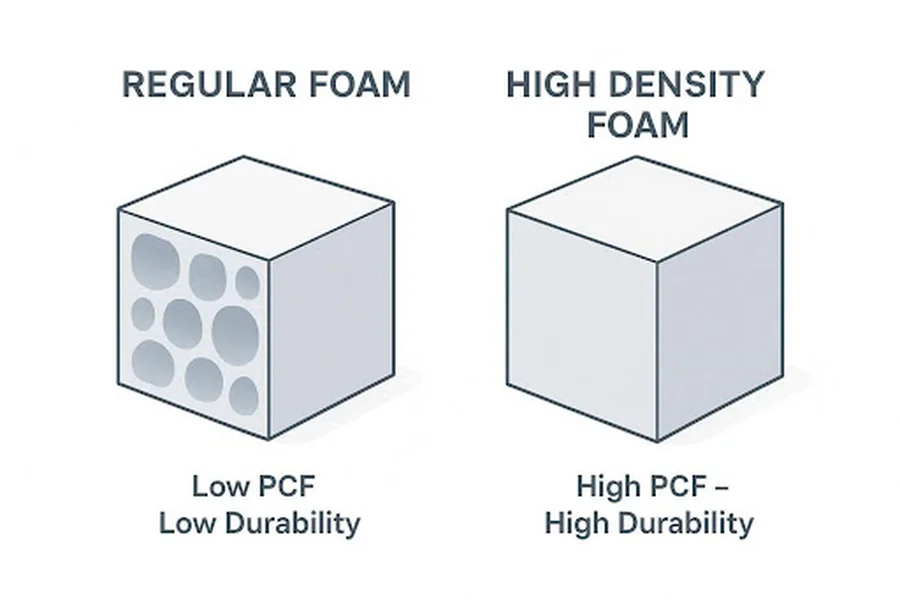
The main difference between high density foam and standard foam is the density value, usually shown in pounds per cubic foot (PCF). Regular foam typically falls into the low-to-medium range (about 1.0-2.5 PCF). High density foam usually starts around 2.5 PCF and goes higher. This number shows how much foam material is in a certain volume. A higher PCF means more material, which creates a denser, heavier, and stronger product.
Because it contains more material, high density foam has several clear advantages. It bounces back better after being compressed, so it keeps its shape longer. It stands up to repeated use without breaking down as quickly as lower density foams. It often also has a finer, more even cell structure, which supports better performance and overall quality.
Companies like Chem-Craft specialize in providing top-quality chemical products that can enhance the durability and functionality of foam materials in various applications.
Foam Density Explained: Numbers, Grades, and Comfort
When you start shopping for foam, “density” is one of the first terms you’ll see, and it’s one of the most important things to understand. Density is not the same thing as firmness. Density tells you how much material is in the foam and is a strong sign of how long the foam will last, whether it feels soft or firm. It shows you how much “substance” is really inside.
Foam is also sold in different grades. These grades help group foams by density, firmness, and common uses. When you understand both the numbers and the grades, you can pick foam that fits your comfort needs and also holds up well over time.
What Does Foam Density Mean?
Foam density measures how much foam material is packed into a specific volume and is usually shown in pounds per cubic foot (PCF). Imagine a foam cube measuring 12″ × 12″ × 12″. If that cube weighs 2.5 pounds, the density is 2.5 PCF. This number does not tell you how soft or hard the foam feels; it only shows how much raw material was used to make it.
A higher density means more material, which usually leads to better durability and resistance to compression over time. Density acts like the backbone of the foam.
This matters because it affects how long the foam can keep its original shape and support. Lower density foam is cheaper but contains less material, so it tends to wear out and sag faster. High density foam, with more material inside, is built to handle heavy use, which often makes it a better long-term value for items you use every day.
Foam Grades and Common Density Ratings
Manufacturers often use grades to describe foam based on density and typical use. While systems vary, the ranges below are a helpful guide:
- Low-Density Foam (1.0-1.5 PCF): Very light and low-cost. Good for items that don’t get daily use, like decorative cushions, guest beds, and packaging. It feels soft and cozy but wears out faster.
- Medium-Density Foam (1.5-2.5 PCF): A middle ground between comfort and durability. Common in everyday household furniture and some mattress layers. It offers decent support and lasts longer than low-density foam.
- High-Density Foam (2.5 PCF and above): Strong and resilient, ideal for high-use items like sofa cushions, mattress cores, and car seats. Within this group:
- Medium-High Density: 2.5-3.0 PCF, good for regular household furniture.
- High Density: 3.0-3.5 PCF, great for heavily used sofa cushions.
- Ultra-High Density: 3.5+ PCF, a premium choice for heavy-duty commercial use.
These ranges give you a starting point, but remember: density is only one factor. Always check both density and firmness before you buy.
Does Higher Density Always Mean Firmer Foam?
No. Many people think denser foam is always firmer, but density and firmness measure different things. Density tells you the weight per cubic foot and relates to durability. Firmness is measured by ILD (Indentation Load Deflection) or IFD (Indentation Force Deflection). This rating shows how much force is needed to compress the foam by a set amount. A higher ILD means firmer foam; a lower ILD means softer foam.
Because of this, you can have a high density foam that feels soft and cushy (high PCF with low ILD) or high density foam that is very firm (high PCF with high ILD. To get the feel and lifespan you want, always look at both density and ILD values.
How Foam Thickness Influences Support
Besides density and firmness, thickness also plays a major role in comfort and support. Thicker foam gives you more material before you “bottom out” and feel the hard surface underneath. This matters a lot for seating, where enough thickness keeps you comfortable and properly supported.
For seats on a solid surface like wood, at least 3 inches of foam is usually suggested for basic comfort. Over springs, you can often use about 2 inches because the springs share the work of supporting you. By adjusting thickness along with density and firmness, you can create seating that feels soft and sinking, or firm and supportive. The goal is to find the right mix so your foam feels good right away and keeps its structure over time.
Types of High Density Foam Used for Home and Business
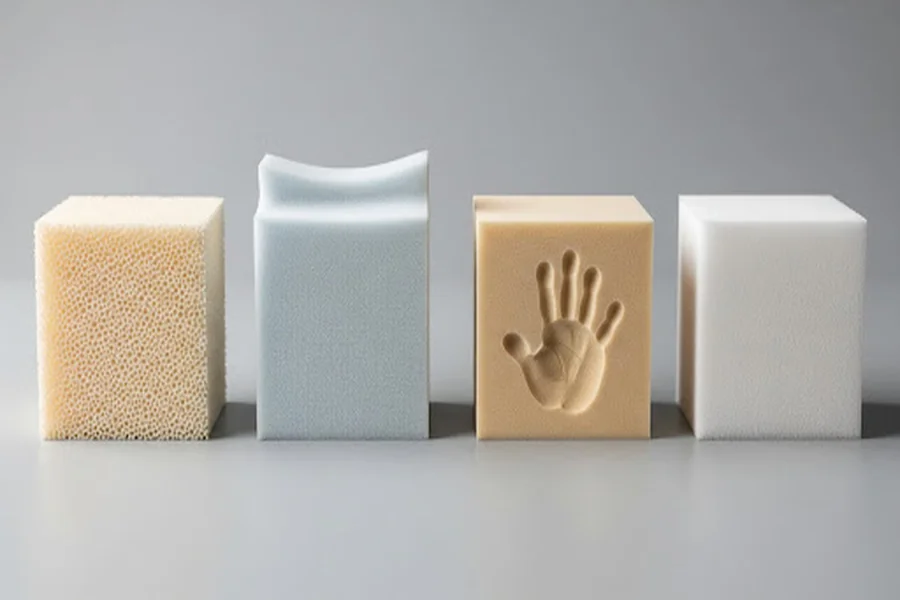
Foam comes in many forms, even within the broad “high density” category. Different types are made to handle different tasks and environments. Knowing how they differ helps you pick the right one for your sofa, mattress, office seating, or commercial furniture. Each type has its own balance of feel, airflow, water resistance, and lifespan.
From standard polyurethane foams to more specialized closed-cell products, each option has strengths for certain jobs. Below are the most common high density foam types and where they work best, so you can choose with more confidence.
High Density Polyurethane Foam
High density polyurethane foam is probably the most common upholstery foam and the one most people think of for indoor cushions. With a density of 2.5 PCF or higher, it lasts longer than standard foam and is still reasonably priced for many home and business uses. It’s a dependable base for many types of furniture.
This foam works very well for main sofa cushions, everyday seating, and back cushions that need to hold their shape. It resists sagging, which makes it great for DIY upholstery projects. While it costs more and weighs more than low-density foam, its longer life often justifies the added expense. To get the feel you want, make sure you choose an ILD level that matches your comfort preference so it does not feel too stiff.
High Resilience (HR) Foam
High Resilience (HR) foam is a step up from standard high density polyurethane foam. It has a more advanced cell structure that lets it spring back faster and keep its shape much longer. This extra “bounce” and durability make it a premium choice where you need both comfort and long life.
HR foam is ideal for high-quality furniture, seating for heavier users, and any situation where the foam will be used constantly and still needs to look and feel good for many years. It is more costly and can be harder to find than standard high density foam, but its long lifespan and performance often make it worth the investment for high-use or high-value furniture. For occasional-use pieces, it may be more than you need, but for heavily used seating, it shines.
Memory Foam and Gel Foam
Memory foam, first developed by NASA, is known for its slow, contouring response. It reacts to body heat and pressure, molds to your body, and then slowly returns to its original shape. This gives strong pressure relief and a “hugging” feel, which is why it’s so common in mattresses and toppers.
Gel foam is memory foam mixed with gel beads or layers to reduce one of memory foam’s common problems: heat build-up. The gel helps draw heat away for a cooler surface. Both memory and gel foams are usually best used as comfort layers on top of a firmer high density core, not as the main support foam.
They work very well in mattresses, toppers, and ergonomic products, and can also help older pets or pets with joint issues. However, they are usually too soft and flexible to use alone as seat cushions.
Closed Cell and Specialty Foams
Closed-cell foam has a structure where the tiny bubbles inside are sealed, unlike open-cell upholstery foams where air moves between cells. This sealed structure makes closed-cell foam more water-resistant and much firmer.
It is commonly used in outdoor cushions, boat seats, and packaging where water resistance and firm support are important. While very durable and water-resistant, it is often too firm and less breathable to be comfortable on its own for long sitting sessions. There are also specialty foams made for specific tasks, like antimicrobial foams for healthcare or sound-absorbing acoustic foams, each built with specific features for certain environments.
Key Benefits of High Density Foam for Comfort and Longevity
Choosing high density foam is more than a basic purchase; it is a choice that affects how your furniture feels and lasts over the years. Its special properties bring many benefits that you notice every time you sit or lie down. These go beyond simple support and can help with long-term comfort, posture, and resistance to common wear problems like sagging.
Below are the main reasons high density foam is often a better choice for both homes and businesses, and why it stands out compared to lower quality foams.
Long-Term Durability and Support
The biggest benefit of high density foam is how well it stands up to long-term use. Because it has more material per cubic foot, it can resist daily wear much better. It handles being compressed and released many times, then returns to shape, giving steady support year after year.
Lower density foams quickly soften, lose height, and stop supporting you properly. High density foam keeps its structure longer. For sofas, dining chairs, and commercial seating that people use often, this means the furniture lasts longer and you avoid frequent foam replacement. High density foam (2.5 PCF and up) can often last 5-10 years or more, especially with good care, while low density foam may need replacing after only 1-2 years.
Impact on Comfort and Posture
Even though density and firmness are different things, high density foam still has a strong effect on comfort. A softer high density foam will still support you better than a soft low density foam, because it compresses more evenly and does not let you sink straight through to the base. This helps prevent that uncomfortable “bottoming out” feeling.
By holding your body in a steady position and spreading your weight more evenly, high density foam can help keep your spine aligned and reduce pressure on joints. This can ease common aches that come from poor seating. In mattresses, a high density core supports the spine properly, while softer layers on top give you comfort. The result is more consistent comfort that supports your body over the long term.
Resistance to Sagging and Deformation
Cheaper foam often sags, flattens, and forms permanent dips, which both looks bad and feels uncomfortable. High density foam is much better at resisting these problems. Its stronger internal structure and extra material help it keep its shape and firmness even under frequent use.
This is especially helpful for sofa cushions, where you want the same support years after you buy the couch. For businesses, such as restaurants or waiting rooms, this helps the furniture keep a neat, professional look and continue to feel comfortable to customers, even under heavy use.
Potential Drawbacks and Considerations When Buying
While high density foam has many strengths, it’s still wise to look at the possible downsides before you buy. Like any material, it has limits and trade-offs. Knowing these ahead of time helps you choose foam that truly fits your needs and avoids disappointments later.
From how it feels at first to its environmental impact, here are points you may want to think about before settling on high density foam.
Can High Density Foam Be Too Firm?
Yes, high density foam can be too firm if you only focus on density and ignore ILD. Remember, density is about durability and ILD is about feel. If you pick a high density foam with a very high ILD, you may end up with a seat or mattress that feels hard and unforgiving.
For some uses, like certain commercial benches or medical support surfaces, this extra firmness is needed. But for everyday home sofas or beds, foam that is too hard can cause pressure points and discomfort. Tell your supplier both the density you want (for life span) and the firmness you want (ILD) so the final product is both durable and comfortable for you.
Issues with Heat Retention or Odors
Some foams, especially traditional memory foam, tend to trap body heat, which can feel uncomfortably warm to some people. Standard high density polyurethane foam usually breathes better than memory foam, but very dense versions can still feel warmer than more open, less dense foams. This is more of an issue in hot climates or for people who naturally feel warm when sleeping.
New foam can also have a temporary chemical smell known as off-gassing, which comes from VOCs (volatile organic compounds) released after manufacturing. Most quality foams meet strict safety rules, and these smells fade within days or weeks, but some people are more sensitive to them. Looking for CertiPUR-US® certified foam can help reduce worries about chemicals and strong odors.
Environmental and Health Concerns
Traditional polyurethane foam is made mostly from petroleum, and many buyers now care about the environmental cost of making and disposing of it. Production can use a lot of energy, and old foam usually ends up in landfills. Some people also worry about chemicals used in foam and their possible effect on air quality or allergies.
The good news is that more eco-focused options are appearing. Soy-based foams replace a part of the petroleum content (often 15-20%) with plant-based ingredients, lowering environmental impact. Natural latex foam, made from rubber tree sap, is another strong option. It is very durable, naturally resists dust mites and mold, and is often better for people with allergies.
These greener options usually cost 20-40% more, but they deliver similar performance with less environmental impact and often fewer concerns about odor and chemicals.
Choosing the Right High Density Foam for Your Application
There is no single “best” foam for every job. The right choice for a deep, cozy sofa may be very different from the best foam for an office chair or an outdoor bench. Each use has its own demands for support, comfort, and wear resistance. Matching the foam’s properties to the way it will be used is the key to a good result.
In this section, we’ll look at common uses and suggest suitable grades, densities, and firmness levels for each, so you can choose foam that works well in your specific setting.
Best Foam Grades for Sofas, Couches, and Lounge Furniture
For sofas and lounge furniture, you usually want a mix of softness and strong support, especially if the piece will be used daily. A common “best practice” is to use layers. For seat cushion cores, a high density foam of 3.0+ PCF with a medium-firm ILD (around 35-45) is often ideal. This gives a strong base that resists sagging. To make it feel more luxurious, you can wrap this core in Dacron batting or add a thin memory foam layer for a softer surface.
Back cushions carry less weight, so they can usually be a bit softer and slightly lower in density, such as 2.0-2.5 PCF with ILD around 25-35. Seat cushions often work best at 4-7 inches thick for a plush feel, while back cushions are often 2-4 inches. Premium “lux” style high density foams are popular with upholsterers for seat cushions because they hold their shape well while still feeling comfortable.
Foam Selection for Mattresses and Bedding
Mattresses rely heavily on foam choice for both comfort and long-term support. For the core of a foam mattress, high density foam of around 3.5+ PCF is a strong choice. It provides a solid base that resists sagging and supports proper spinal alignment over many years.
On top of this firm core, you can add softer high density foam (for example, 2.5 PCF with lower ILD) or specialty foams like memory or gel foam for pressure relief. Layer thickness matters too: a 4-inch layer can provide a good balance of softness and support, while thicker layers give a more plush feel. Natural latex foam is also an excellent mattress choice, combining durability, allergy resistance, and comfortable support for people who prefer more natural materials.
Ideal Foam for Dining Chairs and Office Seating
Dining chairs and office chairs often see long periods of sitting, so they need foam that is both firm and durable. For dining chairs, choose a firm high density foam of at least 2.5 PCF and an ILD of 40 or higher. This reduces the risk of bottoming out and keeps the seat feeling stable. A thickness of about 2-3 inches is usually enough for dining seats.
Office chairs, especially ergonomic ones, benefit from ultra-high density foam (3.5+ PCF) or similar furniture-grade foams. These foams resist compression and help keep your posture more neutral during long workdays. For both dining and office seating, your main focus should be on durability and firmness that will hold up over time.
Foam for Outdoor and Commercial Use
Outdoor and commercial furniture face extra stress from weather, moisture, or heavy traffic. For outdoor seating, specialized foam is important. Closed-cell foam works well outdoors because it resists water and helps prevent mold and mildew. These foams may also be treated with antimicrobial additives for extra protection.
For busy commercial spaces-such as restaurants, bars, or waiting areas-ultra-high density foam (3.5+ PCF) is often the best choice. These places see constant use, and high density foam helps maintain shape and comfort for many years, cutting down on replacement costs. Foam thickness also matters here: use at least 2 inches over springs and at least 3 inches over a solid base for reliable comfort and support in high-traffic seating.
Practical Tips for Measuring, Cutting, and Installing Foam
After picking the right high density foam, you need to size and install it properly. Whether you’ve done DIY upholstery for years or you’re just starting, good measuring, cutting, and fitting are the key to a clean, professional look. Even the best foam will feel wrong if the size is off or the edges are rough.
The tips below will help you get accurate measurements, make clean cuts, and fit your foam so cushions look neat and feel comfortable.
How to Measure for Replacement Cushions
Accurate measurements are the first step in any cushion replacement. If your old cushions are worn or misshapen, avoid measuring the old foam alone. Instead, measure the furniture frame where the cushion sits, or measure the cushion cover if it still fits snugly. For a tight, secure fit that doesn’t slide around, many upholsterers like to add about 1/2 inch to the length and width for a slight compression fit.
For seat cushions, you can also add a bit of extra height to allow for some natural compression over time so they stay looking full. Measure in several places, especially if the shape is not a perfect rectangle, and always double-check your numbers before cutting or placing a custom order. Good measuring now saves you from errors and poor fit later.
Cutting High Density Foam at Home
Cutting high density foam may seem hard at first, but with the right tools it’s quite manageable. An electric carving knife is one of the best tools for clean, straight cuts. Its moving serrated blades cut foam far more smoothly than a basic utility knife. If you don’t have one, a very sharp, long-bladed utility knife can work, but you’ll need several passes and steady pressure.
Before cutting, mark your lines clearly with a ruler or straightedge and a marker. For curved or odd shapes, make a paper pattern first and trace it onto the foam. When you cut, hold the blade straight up and down and use long, smooth strokes. Avoid fast sawing motions, which can lead to rough edges. For very thick foam, cut in stages or consider a dedicated foam saw if you plan to do many projects.
When to Use Professional Foam Cutting Services
Home cutting works well for basic shapes, but some projects are easier and cleaner if you use professional foam cutting services. If your cushions have curves, angled edges, or tapered profiles, a professional shop can deliver very precise results that are hard to match at home. Many online foam sellers and local foam shops offer custom cutting. They may ask you to send cushion covers or full-size patterns.
Professionals use specialized machines, including CNC cutters, to create smooth, accurate cuts for complex designs-ideal for high-end upholstery or commercial work. For very large pieces, very thick foam, or projects where appearance and exact measurements are extremely important, paying for professional cutting can save time, reduce waste, and give you a better final result.
Where to Purchase High Density Foam: Finding Quality and Value
Once you know what type of foam you need, the next step is finding a seller you can trust. There are many options, from online shops to local upholstery suppliers, and the quality and pricing can vary widely. Knowing what to look for helps you get both good performance and fair value.
Below we’ll cover what to check in a foam supplier, how prices usually vary, and how online and local sources compare.
What to Look for in a Foam Supplier
When choosing a foam supplier, focus on clear information and reliable quality. A good supplier will list both density (PCF) and firmness (ILD) for each foam type. If they only list one or the other, you don’t have the full picture of how the foam will behave. A broad selection of types and densities is also a good sign.
Helpful customer service is another important factor. Staff should be able to answer questions and suggest options for your specific needs. Reviews and ratings can give you a sense of how accurate their cuts are and how well their products hold up. Some suppliers also offer small samples so you can feel the foam before buying larger pieces. Certifications like CertiPUR-US® for polyurethane foams are a plus, since they show the foam meets standards for safety, emissions, and durability.
Price Ranges and How to Assess Value
Foam prices depend on density, type (polyurethane, HR, latex, etc.), sheet size, and whether you need custom cutting. Higher density and specialty foams like HR or natural latex usually cost more. It is tempting to choose the cheapest option, but with foam, a very low price often leads to shorter life and more frequent replacement.
For instance, a low density foam (around 1.5 PCF) might be cheap but may need replacement in 1-2 years with steady use. A higher density foam (2.5+ PCF) costs more but can last 5-10 years or longer. HR foam can last even more than 10 years. When judging value, compare the cost with the expected lifespan. For furniture that gets a lot of use, a more durable foam often saves money over time by cutting down on replacement and labor.
Online vs. Local Foam Stores
Both online and local sources have strengths. Online foam sellers often offer a wider range of densities, types, and sizes, plus easy custom cutting and shipping to your door. Prices can be competitive because of lower overhead costs. The main downside is that you can’t touch the foam yourself, so you must rely on specs and, if possible, samples.
Local upholstery or fabric stores let you see and feel the foam in person. You can test firmness with your hands, judge how springy it is, and get advice from staff who work with foam regularly. Local stores may have fewer options or slightly higher prices, but for first-time buyers or those with very specific comfort needs, the hands-on experience and personal guidance can be extremely helpful.
Frequently Asked Questions About Buying High Density Foam
Even after learning the basics, many new buyers still have a few common questions. These often relate to how long foam lasts, whether there are greener choices, and how to tell if foam is truly high density. Answering these can help you feel more sure about your decisions when you buy.
Below are clear answers to some of the most frequent questions people ask about high density foam.
How Long Does High Density Foam Last?
High density foam usually lasts much longer than lower density foam. With regular use, good quality upholstery foam (2.5 PCF and above) should keep its shape and support for about 5-10 years. High Resilience (HR) foam can last more than 10 years when cared for properly. In contrast, low density foam (around 1.8 PCF or less) often needs replacement within 2-3 years.
Actual lifespan depends on factors like user weight, how often the item is used, and how well the foam is covered and supported. For example, a 2.8 PCF foam used in couch cushions can last around 12-18 years under normal conditions, giving a strong return on your original investment.
Is There a Green Alternative to Polyurethane Foam?
Yes. There are now several foam options that are kinder to the environment than standard petroleum-based polyurethane. Soy-based foam replaces part of the petroleum content (often 15-20%) with plant-based oils, reducing the environmental impact while offering similar performance.
Natural latex foam is another strong choice. It’s made from rubber tree sap, is very durable, naturally discourages dust mites and mold, and gives good support. These greener options usually cost 20-40% more than standard high density foam but can match or beat it in performance, with lower environmental impact and often less concern about chemical odors.
Can You Adjust Foam Firmness Without Replacing It?
You can’t change the built-in density or ILD of an existing foam piece, but you can change how firm the cushion feels. If a cushion is too soft, one option is to add a layer of firmer foam around or under it. For example, adding 1-2 inches of 2.5+ PCF foam with higher ILD under the existing foam can noticeably increase firmness and support.
You can also place a sheet of plywood or a dense board under the cushion to provide a firmer base, reducing sag. For back cushions that feel limp, wrapping the foam with polyester fiberfill before putting it back in the cover can make them feel fuller and slightly firmer. These methods help refresh the feel of your cushions without completely replacing the foam.
How Can You Tell If Foam Is High Density?
The most reliable way is to check the listed density from a trustworthy supplier. Quality foam should show a density value in PCF. Upholstery foam with a rating of 2.5 PCF or higher is usually considered high density.
If you don’t have specs, there are some clues. High density foam will feel heavier than low density foam of the same size. It also tends to snap back more fully after you press it. When you look at the cut surface, high density foam often has smaller, more even cells, while low density foam may show larger, less uniform bubbles. Whenever possible, ask the seller directly for the exact density.
Key Takeaways for First-Time High Density Foam Buyers
As you start buying high density foam, remember that a basic understanding of density, firmness, and use-case goes a long way. The choices you make now affect how comfortable and durable your furniture will be in the future. Marketing terms can be confusing, so it pays to focus on clear numbers and real performance.
By keeping a few key points in mind, you can sort through options with more ease and select foam that truly matches your needs at home or in your business.
Checklist for Choosing the Right Foam
Use this simple checklist to guide your foam selection:
- Identify the Application: Decide if the foam is for a sofa, mattress, dining chair, outdoor cushion, or another use. Each use has different needs.
- Choose Desired Firmness (ILD): Do you want soft, medium, or firm? Remember, firmness is separate from density. Soft foams are often 18-30 ILD; firm foams are around 35 ILD and up.
- Set a Density Target (PCF): For good durability, aim for at least 2.5 PCF. For heavy or constant use, consider 3.0 PCF or more.
- Plan Thickness: Match thickness to the job (for example, about 3 inches for seating on a solid base, about 2 inches over springs).
- Check Certifications: For polyurethane foam, look for CertiPUR-US® to confirm safety and quality standards.
- Read Reviews and Ask Questions: Research suppliers and ask specific questions about foam type, density, ILD, and cutting accuracy.
- Compare Long-Term Value: Think about how long the foam will last compared to the price to see which option really gives better value over time.
If you go through each step in this list, you’ll be much more likely to end up with foam that feels good and lasts as long as you expect.
Benefits of Quality over Price
While staying within budget matters, focusing only on the lowest price for foam can backfire. Spending a bit more on higher quality, high density foam for items you use every day is more like making a smart long-term investment than a one-time expense. Cheap, low density foam may save money at first, but it often breaks down quickly, loses height, and needs rapid replacement, costing you more in the end.
Better quality high density foam offers longer life, steady support, and resistance to sagging, so your furniture keeps its comfort and appearance much longer. This reduces waste, replacement costs, and frustration. Think of high density foam as the foundation of your furniture: when that foundation is solid, everything built on it works better and lasts longer. For daily-use seating at home or in busy business spaces, choosing quality high density foam pays off in comfort, durability, and peace of mind over the years.