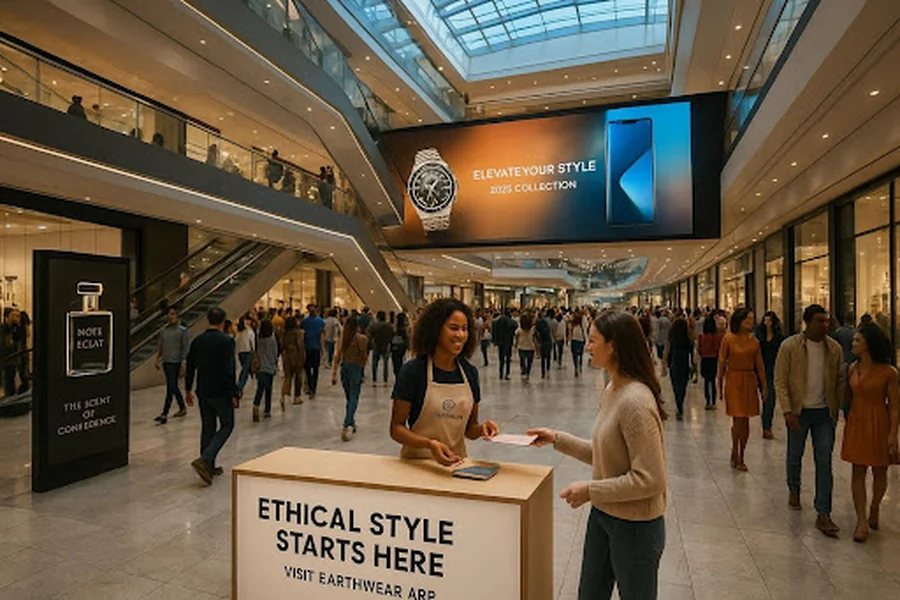
Want to get noticed without overspending? Mall advertising still works very well, even with so much focus on digital. In 2025, malls are growing into activity centers with more experiences, which opens many low-cost ways to get seen. Brands can reach shoppers on a budget with smart placements that turn passersby into paying customers.
Malls give you direct access to people who are out shopping and ready to spend. Unlike online ads that come and go, mall ads live in the space, build memory, and can trigger quick action.
Whether you’re new or established, knowing the range of affordable choices can drive real growth. For more on outdoor tactics in shopping centers, visit mall advertising BE Media.
Why Brands Choose Mall Advertising for Cost-Effective Visibility
Malls draw steady crowds every week. This regular foot traffic gives brands a strong chance to boost visibility and connect with people in memorable ways. With so many distractions online, a clear message in a mall can stand out and feel more real.
Mall visitors are often relaxed and open to browsing. They are more likely to notice and welcome ads than someone quickly scrolling a phone. Seeing an ad in person helps people remember it and can be a key part of long-term brand building.
Mall Advertising vs. Other Local Advertising Channels
Compared with billboards on busy roads, mall ads are seen by people walking, so they have more time to read and look closely. Print ads can’t match the motion, video, and interaction that mall screens offer. You can also target better by picking areas tied to certain shopper groups based on the mall’s stores and style.
Another big plus is how close ads are to stores. If someone sees an ad near a shop, they can act right away. This short path from interest to purchase is a major advantage over many other local options.
Advantages for Startups and Small Businesses
For small budgets, mall ads can deliver a lot. You can pick from small posters to shared digital slots and still get solid reach. It’s a simple way to build a local presence and trust, even without your own store in the mall.
You can also start small, measure results, and grow. Test one mall at a low cost, then expand if it works. This approach lowers risk and helps you get the most from your spend.
Impact on Brand Awareness and Customer Engagement
Mall ads help people remember your brand through repeated exposure in busy areas. Beyond visibility, you can add interactive moments-like kiosks or pop-ups-that let shoppers try, touch, and ask questions.
Face-to-face contact builds trust and loyalty that digital alone often can’t match. Good in-mall experiences spark word of mouth and social sharing, extending your reach well beyond the site.
Types of Affordable Mall Advertising Options for Brands
Mall advertising goes far beyond billboards. Today’s malls offer many budget-friendly formats that let brands get creative and reach the right people. From simple posters to modern screens, there’s a fit for most goals and budgets.
The key is matching the format to your message and how people move and shop in that mall. This section covers a range of lower-cost choices and how to use them well — a practical approach often used by BE Media when designing effective, scalable retail-environment campaigns.
Static Displays and Posters
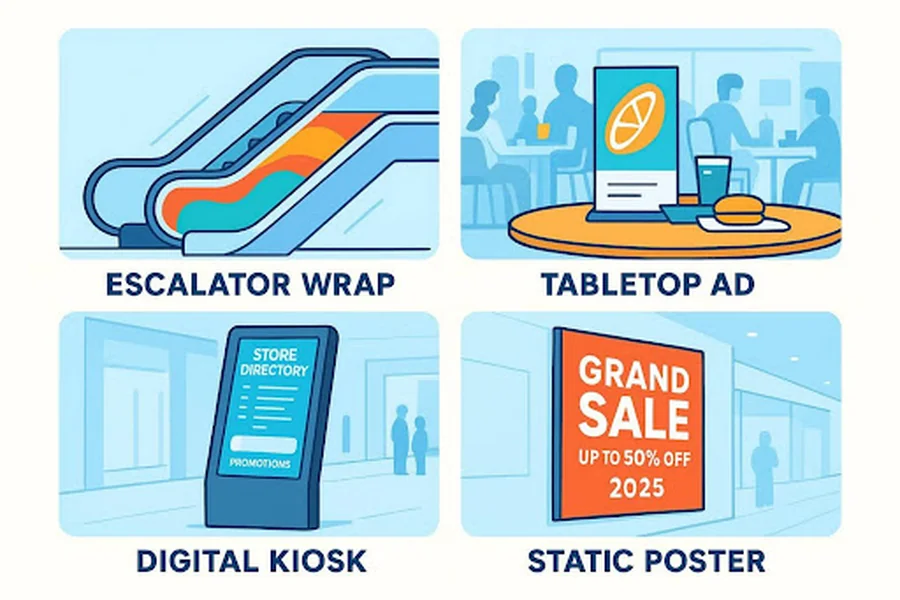
Static posters are reliable, low-cost tools with high visibility. Place large prints at entrances or food courts, and smaller ones near escalators or seating areas. They stay in place all day, so shoppers have time to take in your message.
Costs vary: big posters in prime spots often run $2,000-$10,000 per month, while smaller displays can be $500-$3,000 monthly. Use bold visuals and short copy to promote offers, events, or brand awareness.
Digital Screens and Electronic Billboards
Digital screens bring motion, video, and easy updates. From kiosks to big LED walls, you can swap messages fast for seasons or real-time promos. This keeps content fresh for repeat visitors.
These placements usually cost more than static posters but often deliver better interaction, especially with younger audiences. A 10-15 second loop on a 42-55 inch screen might cost $2,000-$5,000 per month. Large LED walls can run $5,000-$15,000 monthly. Interactive displays let shoppers browse products or features with a touch.
Kiosks and Pop-Up Shops
Kiosks in busy corridors are great for demos, samples, and one-on-one chats. You can explain benefits clearly and sell on the spot.
Pop-up shops add excitement and are perfect for launches, trials, or reaching new groups. They often spread on social media. Interactive kiosks commonly cost $3,000-$7,000 per month and can deliver strong on-site engagement.
Escalator and Elevator Wraps
Wrapping escalators and elevators grabs attention as people move between floors. Riders are a captive audience and will likely notice your message.
Keep copy short and visuals bold. Typical costs are $550-$1,500 per display for four weeks, making these a low-cost way to stand out in high-traffic pathways.
Window Graphics and Door Clings
Window and door graphics are flexible and budget-friendly. Use them on store windows, railings, or entrance doors to highlight deals, new arrivals, or QR codes that link to online offers.
They blend into the space but still pop when designed well. Swap them in and out for seasons or special promotions with minimal hassle.
Sampling Campaigns and Product Demonstrations
Sampling works well for food, drinks, and cosmetics. A booth in a busy area lets shoppers try before they buy, which can lead to quick sales and positive word of mouth.
Product demos give people hands-on time to see quality and features. While you’ll have staffing and product costs, the chance to convert on-site and build loyalty makes this a strong tactic.
Interactive and Experiential Installations
If you need to stand out, build an experience. Think touch screens that show features, VR setups, or AR games and hunts. These ideas pull shoppers in and are highly shareable.
They can cost more than simple posters, but the memory they create can pay off. One example: The North Face used VR to place users in scenic settings, linking the brand with adventure.
Food Court Tabletop Ads and Placements
Food courts are busy, and people linger there. Tabletop ads catch attention while shoppers eat or rest. They replace standard table inserts, keeping your message in plain sight.
They are very affordable, often $75-$300 per display for four weeks. This low cost plus long dwell time makes them ideal for local offers or broader campaigns that benefit from repeated views.
Shopping Bag Sponsorships
Partner with retailers to print your ad on shopping bags. Your message moves around the mall and even goes home with shoppers.
This is useful for offers, brand partnerships, and awareness. Costs usually relate to bag production, making it a budget-friendly way to get broad reach. It turns a practical item into walking media.
Car Park and Entrance Banner Opportunities
Start your messaging outside with car park ads and entrance banners. These placements speak to drivers and walkers right as they arrive.
They can direct people to certain stores or events before they even enter. While larger banners may cost more, the first impression and guidance they create can be very strong.
Cost Breakdown and Pricing Models for Mall Advertising
Knowing how mall ad pricing works is key if you want to stretch your budget. Costs vary by format, location, and time on display. With smart planning and the right deals, small budgets can still hit big goals. Look at sticker price, pricing models, possible extra fees, and ways to negotiate.
By breaking down the pieces and planning ahead, you can make sure your spend supports your goals and delivers results.
Average Costs by Advertising Format
Prices cover a wide range. Here’s a simple view of common formats and budgets:
| Format | Typical Duration | Approx. Cost Range |
| Food court tabletop ads | 4 weeks | $75-$300 per display |
| Escalator/elevator wraps | 4 weeks | $550-$1,500 per display |
| Backlit kiosks | 4 weeks | $750-$2,500 |
| Static banners | 1 month | $1,500-$10,000 |
| Digital screens (42-55”, 10-15s loop) | 1 month | $2,000-$5,000 |
| LED walls | 1 month | $5,000-$15,000 |
| Interactive kiosks | 1 month | $3,000-$7,000 |
These ranges show the spread from low-cost to high-impact picks, so you can match the choice to your budget.
Short-Term vs. Long-Term Placements
Short runs (days or weeks) work well for seasonal pushes, launches, or events. You pay more per day but spend less overall, and you get quick visibility. The trade-off is less lasting brand impact.
Long runs (months or a year) often come with lower average monthly rates. You build steady recall and deeper engagement. Many malls offer discounts for longer bookings. Pick based on your goal: quick hit or steady presence.
Negotiation Tips and Hidden Cost Considerations
- Ask for discounts with longer runs or multi-mall buys.
- Test a pilot to check ROI before scaling.
- Book off-peak periods to get better rates.
- Request packages instead of one-offs.
Watch for extra costs: installation, printing/production, tech fees for digital, and seasonal mark-ups. Some creative work is cheaper with outside vendors than mall services. Compare before you decide.
How to Estimate ROI Based on Foot Traffic and Impressions
Use footfall data from the mall to estimate impressions. For example, 10,000 daily visitors in a high-traffic zone can add up to tens of thousands of weekly views.
Add trackable tools: QR codes to special offers, unique promo codes, or custom landing pages. Track visits, scans, redemptions, and store traffic during the campaign. For demos and sampling, track interactions, sign-ups, and items given out. Compare outcomes with spend to get a rough ROI and adjust future plans based on what works.
How to Select the Right Mall and Placement for Your Brand
Picking the right mall and the right spot inside it matters a lot. You want to reach the right people with the right message at the right moment. A smart selection process helps your ad connect and makes your budget work harder. Look at shopper data, behavior, and prime locations.
Without careful choices, even great creative can miss. Do the research before you book anything.
Analyzing Mall Demographics and Shopper Behavior
Start by looking closely at who visits the mall. Some malls lean upscale; others draw families or young professionals. Study age, gender, income, habits, and favorite stores. Align your message with the people most likely to care.
Also check the mall’s purpose. Is it mostly for shopping, or does it mix in dining, entertainment, and events? Sites with more to do often have longer dwell times, giving your ad more chances to be seen. Pick a mall that matches your audience’s lifestyle.
Choosing High-Impact Locations Within the Mall
After choosing a mall, pick spots that get the most eyeballs. Central courts work well for large visuals or experiences because many levels can see them. Busy corridors near anchors and popular restrooms deliver steady flow.
Look for places where people pause-food courts, seating, escalators, and elevators. These give longer viewing time. Visit the site and check sightlines and any blocks that could reduce visibility.
Targeting by Store Proximity and Area Foot Traffic
Place ads near your own store to guide people straight to you. This short path often lifts conversion.
You can also place near competitors to catch their audience. Pick high-traffic spots, but also match the shopper type. For example, kids’ apparel near toy stores beats a high-fashion wing for the same product. Map the mall and pick “hot zones” that fit your offer.
Creative Strategies to Maximize Return on Limited Budgets
Small budgets can still make a big impact. Tight funds often lead to sharper ideas and smarter use of space. Aim for engaging moments that prompt action and make every dollar count.
With a few clever tactics, even small brands can stand out. Try the ideas below to get noticed without overspending.

Using Interactive Elements Like QR Codes and AR
Interactive tools are cost-friendly and connect offline with online. Add QR codes to posters or screens that link to discounts, demos, or sign-ups. You get engagement and data for tracking and future outreach.
AR can add a fun layer. Create simple filters or games that work on phones, like a hunt for virtual items with real prizes. People share these moments, which expands your reach.
Running Giveaways, Scavenger Hunts, and Contests
Prizes pull in attention at a low cost. A scavenger hunt can send shoppers to certain areas or stores, guiding them to your brand. Place clues smartly and reward with discounts or freebies.
Giveaways and contests add urgency. Ask people to visit, try something, or post on social to enter. This boosts traffic, leads, and awareness through their networks.
Partnering with Influencers and Local Businesses
Local creators can highlight your display, test products, and share with followers who trust them. Posts, videos, or live streams from the mall help bring people in.
Team up with nearby businesses for shared events, cross-promo, or joint prizes. You’ll reach new groups and split costs while building community ties.
Seasonal and Event-Based Campaign Planning
Time your ads with holidays, back-to-school, and mall-wide events. These periods bring bigger crowds and a shopping mindset. Plan ahead to get the best spots.
Match your creative and offers to the moment. A festive setup during the holidays or a school-break theme can draw more attention and action. Sync with the mall’s calendar to ride existing momentum.
Mistakes to Avoid and Best Practices for Affordable Mall Advertising
Mall advertising pays off when you handle the details well and avoid common traps. This matters even more on a tight budget. Follow smart steps and keep your message clear and on-brand.
Blend creativity, rules, and careful execution. Learn from common missteps to get better results.
Common Pitfalls When Selecting Low-Cost Options
A cheap spot with low traffic is still a bad buy. Don’t skip the homework on footfall and audience fit. Pick areas that match your target.
Keep copy short and visuals clean. People are moving and surrounded by signs, so clarity wins. Also, don’t scale up before you study early results. It’s best to start small, measure, and expand based on data.
Compliance with Mall Advertising Policies
Every mall sets rules for content, size, install, and timing. Get approval from management before you launch. Many malls restrict certain categories (like alcohol) and reject misleading or offensive content.
Local rules may add more limits. Review policies early, and work with an experienced partner or mall team to avoid delays, fines, or removals. This helps you run a smooth, compliant campaign.
Maintaining Brand Integrity on a Budget
Don’t cut corners on design or materials. Low-quality work can hurt your brand image. Even simple posters should look sharp and on-brand.
Use high-contrast visuals and one clear call to action. Digital formats can add motion and variety. With strong creative and smart placement, you can look premium at any budget.
Frequently Asked Questions About Affordable Mall Advertising for Brands
As brands explore mall ads, common questions come up about cost, impact, and tracking. Retail habits change fast, so clear answers help you plan with confidence. Below are quick answers with practical steps.
Use these points to build campaigns that fit your budget and goals.
Should Digital Ads Replace Traditional Mall Posters for Small Budgets?
You don’t have to pick one over the other. Static posters are often cheaper and give steady presence in one spot. They’re a solid choice for small budgets.
Digital screens cost more but can be more engaging and easy to update. For a tight budget, one strong poster in a high-traffic area may beat a shared digital slot. You can add QR codes to posters to connect to online content. A mix often works best: posters for reach, digital touchpoints for extra interaction.
What Kind of ROI Can Brands Expect from Mall Advertising?
ROI varies by strategy, creative, and tracking. A good campaign can lift brand awareness, store traffic, and sales. The Interactive Advertising Bureau has reported that immersive formats can drive higher recall than static alone.
Set clear targets, like a specific lift in visits or leads. Track scans, code redemptions, and traffic during the run. Adjust creative or placement based on engagement to keep improving results.
Are There Minimum Budgets Required for Entry-Level Campaigns?
There’s no hard minimum. You can start small. Tabletop ads can be $75-$300 per display for four weeks. Smaller posters near escalators or seating often cost $500-$3,000 per month.
Many malls offer tiered packages. Begin with one strong placement and scale as results and budget grow. Smart planning beats a big spend.
How Are Campaign Performance and Engagement Measured?
Track direct actions with unique QR codes, landing pages, and promo codes. Measure scans, visits, and redemptions.
Also watch store traffic, website sessions, and social mentions during the campaign. Some malls provide footfall data and heat maps. For demos and sampling, count participants and sign-ups. Combine these signals to judge overall impact and ROI.
Final Thoughts on Achieving Brand Growth with Affordable Mall Advertising
Even with so much digital activity, face-to-face contact still matters. Mall ads let brands connect in ways people remember, building trust that can outlast quick online clicks. Winning here is about smart choices-know your audience, pick the right formats, and use clear, engaging creative.
As malls add more experiences, the chance to build interactive campaigns grows. Blend physical displays with QR codes and AR to create smooth journeys across channels that you can measure. Reaching shoppers in a calm, ready-to-buy mindset gives you a direct path to influence decisions near the point of sale.
In the end, affordable mall advertising is about more than showing your logo. It’s about real connections, standout moments, and turning casual visitors into loyal fans. With careful planning and sharp execution, even lean budgets can fuel strong growth and help your brand stand out in busy retail spaces.