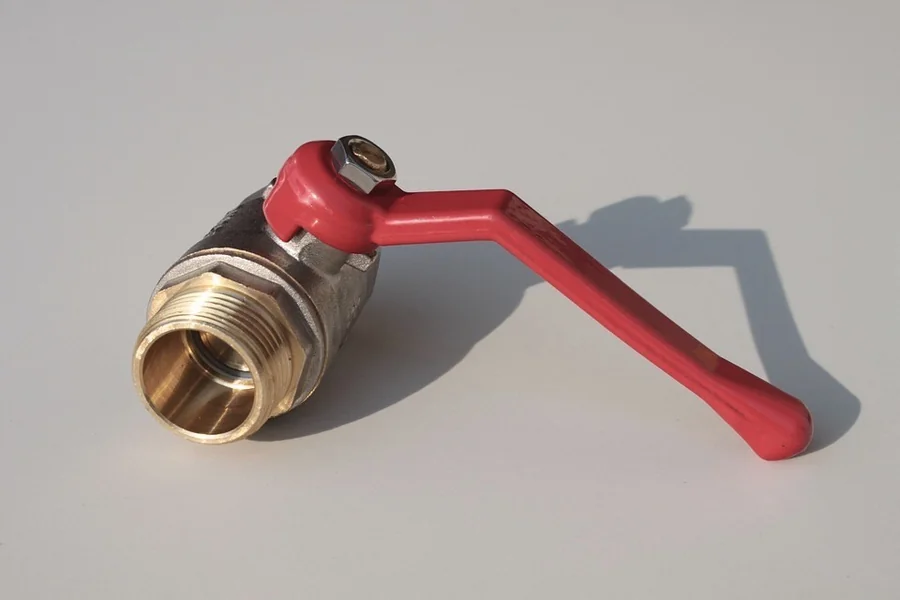
Overview
All valves are essential components of modern piping networks and are widely used for reliable and efficient flow isolation. In industrial environments, industrial ball valves are valued for their durability, rapid operation, and consistent performance under demanding conditions. Their simple design and dependable sealing make them core elements of fluid control and large-scale industrial piping systems.
What Are Ball Valves?
A ball valve is a mechanical device used to start or stop fluid flow by rotating a ball with a drilled borehole. It is classified as a quarter-turn valve because it requires only a 90-degree rotation to move from fully open to fully closed. Owing to this design, ball valves are commonly used as shut-off valves where rapid and decisive flow isolation is required. They are also widely installed as pipeline valves in both industrial and commercial settings.
How Ball Valves Work
The working principle of the ball valve is based on the alignment of the ball bore with the pipeline. When aligned, the fluid passes freely, and when rotated perpendicular to the flow, it is blocked. The tight contact between the valve body and seat ensures reliable performance, even under challenging conditions. This simple mechanism allows ball valves to function as effective flow control valves in systems where on/off control is a priority.
Types of Ball Valves
Several ball valve types have been designed to meet different operational needs. Floating and trunnion-mounted designs address varying pressure demands, whereas full-port and reduced-port options affect flow efficiency. In demanding environments, high-pressure ball valves are engineered to maintain performance without deformation or leakage. These variations allow engineers to select the appropriate valve for specific operational and safety requirements.
Materials and Construction
Selecting the appropriate ball valve material is critical for performance and longevity. Common options include carbon steel, brass, and stainless steel ball valves, which are especially popular because of their corrosion resistance and strength. The choice of material directly influences the valve’s pressure and temperature ratings, ensuring safe operation across different media and environments.
Advantages and Limitations
The main advantages of ball valves are fast operation, minimal pressure loss, and long service life. Their design provides a dependable leak-tight seal, thereby reducing the risk of system failure. However, standard ball valves are not ideal for precise throttling because partial opening may cause wear on the internal components over time.
Applications of Ball Valves
A wide range of industries relies on ball valves for dependable isolation. Typical ball valve applications include water distribution, oil and gas transportation, chemical processing, HVAC systems, and manufacturing plants. Their ability to perform reliably under varying pressures makes them suitable for both utility and industrial applications.
Manual vs. Automated Operation
Ball valves can be operated in different ways depending on the system requirements. Manual ball valves use a lever or gear mechanism and are ideal for simple local control. In automated systems, actuated ball valves are used, relying on electric or pneumatic systems for remote operations. This valve actuation method is essential in modern automated plants, where safety and efficiency are critical.
Frequently Asked Questions (FAQs)
What are ball valves used for
They are primarily used for on/off flow control in low- to high-pressure systems.
What is the difference between ball and gate valves?
Ball valves offer quicker operation and better sealing, whereas gate valves are better for infrequent use.
Can ball valves be automated?
Actuated ball valves use electric, pneumatic, or hydraulic actuators for remote and automated control.