The core difference between free and paid VPNs usually comes down to limits, not security. Free tiers often cap the number of server locations, hold back speed priority, or leave out extras like split tunneling, while paid plans unlock broader access and convenience features. A well-built free VPN can still offer solid encryption and a no-logs approach for everyday browsing — the gap is mainly in capacity and polish, not in whether your traffic is protected.
What does a VPN actually do differently when it’s free vs. paid?
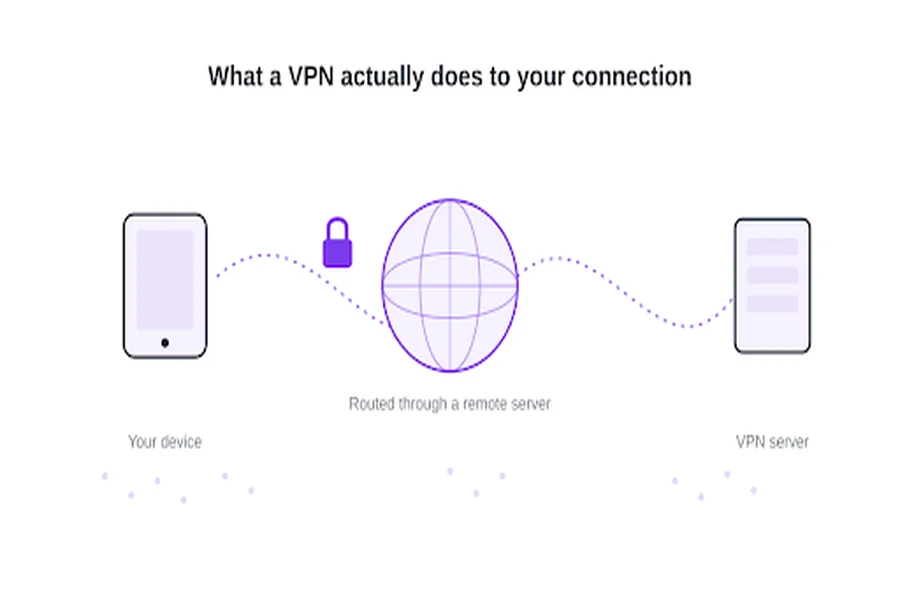
At a technical level, both free and paid VPNs do the same basic job: they encrypt your connection and route it through a remote server. What changes is scale. Free services typically offer a smaller set of server locations and may apply speed or bandwidth limits to manage costs, since running global server infrastructure is expensive. Paid tiers remove many of those caps and often add features aimed at convenience or control rather than core protection, such as choosing specific servers to favorite or routing only certain apps through the tunnel.
How do free VPNs make money without charging users?
Free VPN providers generally fund the service through a freemium model — a limited free tier alongside a paid upgrade — while keeping operating costs low on the free side rather than offering everything at once. This is different from the older model of selling user data, which reputable providers avoid, and it’s why a provider’s no-logs policy and legal jurisdiction are worth checking before trusting it with daily traffic. Not every free service is funded the same way, so it’s reasonable to look at how a provider describes its own policy.
Are free VPNs safe to use for everyday browsing?
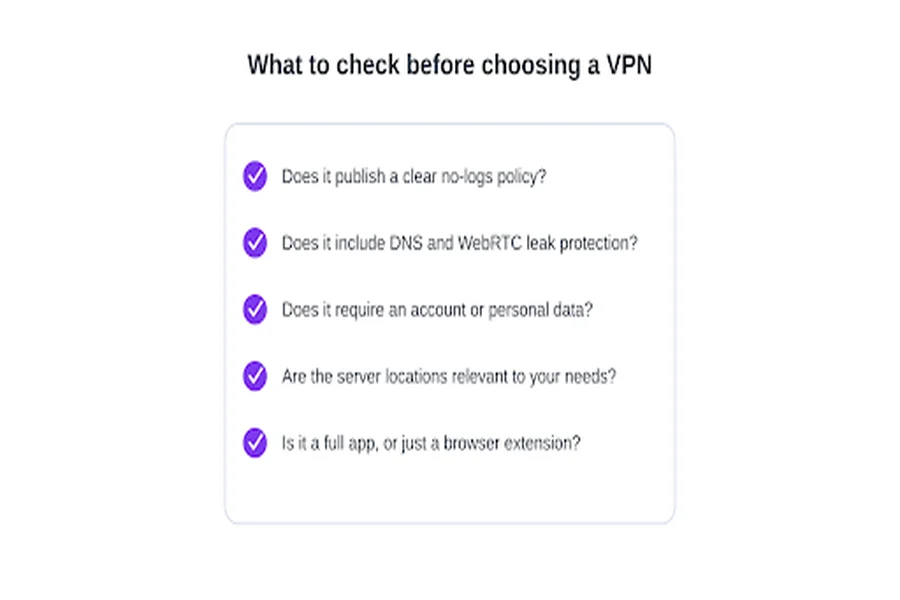
Safety depends more on the specific provider than on the free-vs-paid label itself. Key things to check include whether the service requires an account or personal details to use, whether it publishes a clear no-logs policy, and whether it includes basic leak protection — specifically DNS and WebRTC leak prevention, which stop your real location or browsing activity from slipping through outside the encrypted tunnel. A free VPN with these basics in place is reasonably safe for everyday use like browsing, messaging, or streaming.
What features do paid VPNs typically add?
- More server locations, useful if you regularly need to appear in several different countries.
- Speed priority, reducing slowdowns during peak usage times.
- Split tunneling, letting you route only chosen apps through the VPN while the rest use your normal connection.
- 24/7 support, for faster help if something isn’t working.
- An ad-free experience, since some free tiers include ads to offset costs.
Not everyone needs all of these. Someone who mainly wants basic protection and occasional access to another region’s content can often get by on a free tier — a free, no-registration app such as VPNLY, for example, covers that baseline use case without requiring a paid plan upfront.
Common mistakes people make when choosing a free VPN
A common mistake is assuming “free” automatically means lower security, when the more relevant question is whether the provider has a clear privacy policy and basic leak protection. Another is ignoring server location limits — if a free plan only offers a handful of locations and none match what you need, it won’t solve your actual problem regardless of price. Some people also install a free VPN extension expecting it to protect their entire device, when a browser extension typically only covers traffic inside that browser, not other apps.
Quick comparison: free vs. paid VPN at a glance
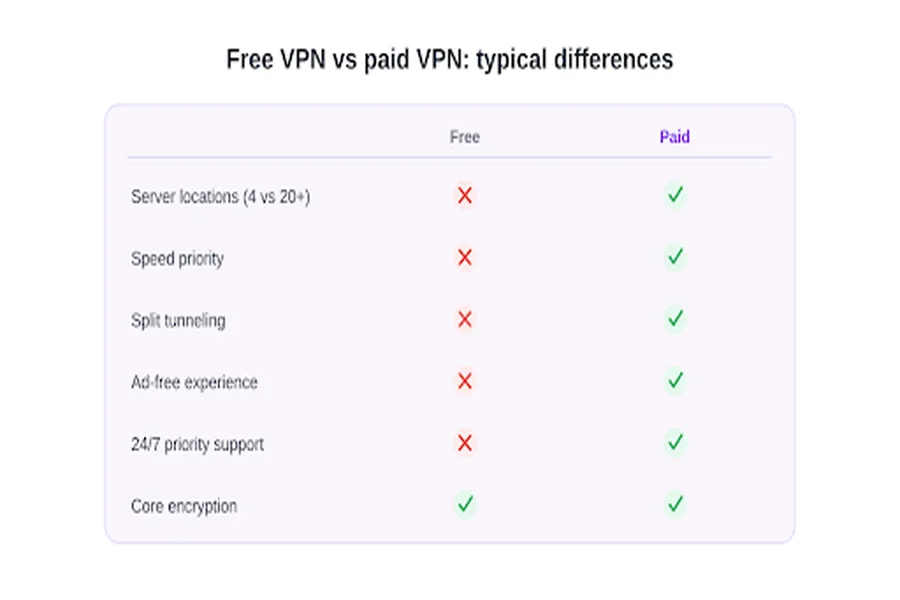
- Core encryption: generally present in both free and paid tiers from reputable providers
- Server locations: usually more limited on free plans
- Speed: paid plans often prioritize speed during high demand
- Extra features: split tunneling, ad-free use, and priority support typically paid-only
- Best for: free tiers suit occasional, basic use; paid tiers suit heavier or more frequent needs
FAQ
Is a free VPN less secure than a paid one?
Not inherently — encryption strength depends on the provider’s technology, not on whether you pay. The difference is usually in server count, speed, and extra features.
Can I switch from a free VPN to a paid plan later?
Most providers that offer both tiers let you upgrade an existing free account rather than starting over, though this varies by service.
Do free VPNs track my browsing data?
Policies vary by provider — checking whether a service publishes a no-logs policy and operates under clear jurisdiction is a reliable way to judge this.
Why do some free VPNs limit speed but not others?
Providers manage free-tier costs differently; some cap speed to manage server load, while others limit server locations instead.
Is it worth paying for a VPN if I only use it occasionally?
For occasional use — checking a site abroad or using public Wi-Fi a few times a year — a free tier is often enough; paid plans make more sense for daily or heavy use.
What’s the biggest practical difference I’ll notice day to day?
Most users notice server location options and speed consistency first, more than any difference in basic security.