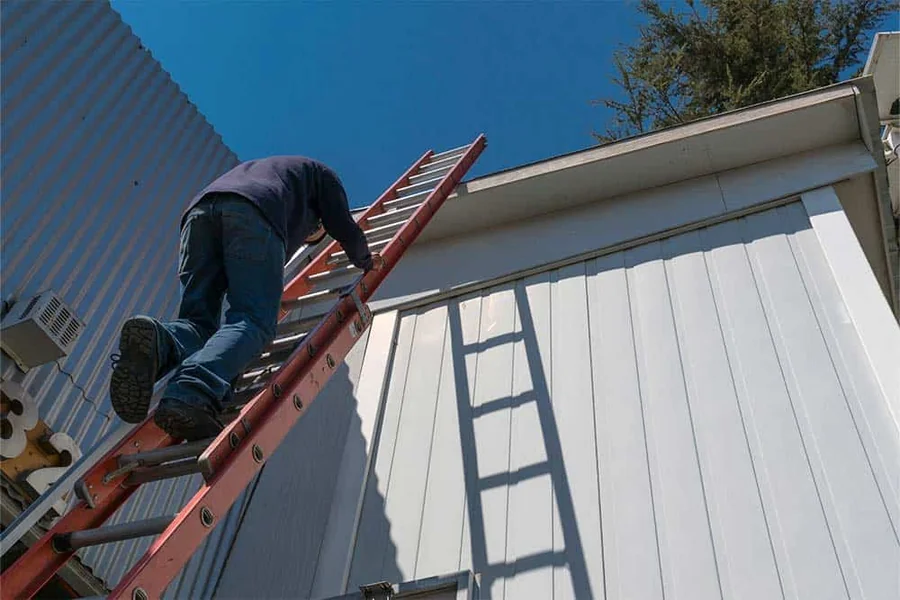
Marco runs a one-man trim carpentry outfit out of Weber County. No crew, no comp policy of his own, 1099 on every invoice he sends. In April he needed to reach a 19-foot eave to check a fascia return, and the general contractor’s 24-foot extension ladder was already leaning there, set closer to vertical than anything a framer would call right. He got about eleven feet up before the base kicked out. Eleven weeks off the tools followed, and because he is a subcontractor and not an employee, every emergency room bill and every canceled job landed on his own name, which is how a man in that spot ends up looking for an accident injury lawyer ogden ut rather than another line of credit. The argument of this piece is narrow: the angle that ladder was set at is a measurable fact, and that measurement decides more about who pays for the fall than most subs ever realize.
A One-Man Crew Has No Comp Behind Him
An employee who comes off a ladder has a lane to walk down. He reports the fall, his employer’s workers’ compensation carrier picks up the medical side, and some fraction of his wages keeps arriving while the leg heals. A 1099 sub has none of that unless he went out and bought a policy on himself, and most one-man shops skip it because the premium looks like a luxury sitting next to a truck payment. So the fall turns into a bookkeeping event. No paycheck, and then the bills start showing up with his name on top of them.
Job after job, the thing nobody checks is the ladder, because it is already standing there and somebody else put it up. That is what I see most often on jobsite falls involving subs: the injured man did not own, place, or inspect the equipment that failed under him. OSHA Outreach Courses put construction’s slip, trip, and fall injury rate at 10.2 per 10,000 workers in a May 2026 roundup, the highest rate of any industry. How many of those hurt people were self-employed and quietly ate the loss? Nobody tracks that number in any way I have been able to find, and I have asked around enough to stop expecting an answer.
Four To One Is A Measurement Not A Feeling
Set an extension ladder at four to one. For every four feet of working height, the base moves one foot away from the wall. Reaching that 19-foot eave, the feet belong roughly four feet nine inches out, not two feet out because a flowerbed was in the way. The ladder also has to extend about three feet above the landing point if anyone is stepping off it, and the footing underneath must be level, firm, and secured so the base cannot slide. The tape measure doesn’t argue.
Federal rules are blunt about that footing. OSHA’s ladder standard at 1926.1053(b)(7) bars using a ladder on slippery surfaces unless it is secured or fitted with slip-resistant feet, which rules out a good share of the mud and morning frost on a custom home site in early spring. When a crew says somebody is footing the ladder, they mean a second person stands at the base with a boot on the bottom rung and holds it steady while you climb, and it costs nothing but a minute of his time. On a one-man job there is no second person, so the setup angle and a tied-off top rail carry the entire load.
Who Set The Ladder Becomes The First Question
Who set the ladder becomes the first question anybody asks, and it gets answered with documents rather than memory. Whose equipment was it? Who leaned it against that eave, and who told a subcontractor to climb it? Whether a general contractor or a property owner carries any responsibility for the setup depends on the law of the state where the job sat, on who actually controlled the site that morning, and on contract language filed away in somebody’s office. Utah does not answer that the same way Nevada does, so it belongs to a lawyer licensed where the fall happened instead of getting settled in a jobsite argument.
Practically, the hour after a fall is worth more than the month after it. Photograph the ladder exactly where it stands, before anyone moves it or coils the rope. Pull names off the site, ask for the daily log while somebody is still willing to hand it over, and keep every page the emergency room prints. A photo showing the base position converts a disagreement into a dimension.
What The First Ninety Days Actually Look Like
Start with the part that is not negotiable. If a fall involved a head impact or any loss of consciousness, get emergency medical evaluation immediately, before anyone makes a phone call about money. Call 911 from the site if he is confused, vomiting, or cannot remember hitting the ground.
The first week is medical and clerical: imaging, written notice to the general contractor, and an honest list of the work coming off the calendar. By week three the income gap has stopped being theoretical, which is usually when a sub finally calls somebody, and it is also when the earliest bills arrive carrying a due date. Around month two the slow work is happening out of sight, pulling site logs, insurance policies, and any inspection record that mentions that ladder. Within 90 days there is normally a clearer picture of which parties may be responsible and whether a claim moves forward, though a serious injury still under treatment runs longer than that, because no case gets valued before the medicine is finished telling you what it costs.
One Call Beats Eleven Weeks Of Guessing
Eleven weeks off the tools cost Marco more than his hospital bills did, and he spent the first three of them guessing about who might be on the hook. A free consultation with an accident injury lawyer ogden ut answers that question in an afternoon, and asking costs nothing at all. Set your own ladders at four to one, get them footed when there is a body available to do it, and photograph anything that gives way under you. A measured setup is documentation, and documentation is what a claim runs on.