When three roof bids land thousands of dollars apart, the number to question first is the roof size, not the price. Homeowners comparing roofing companies west jordan ut usually find that one bid counts 24 squares, the next counts 27, and the third never says at all. Say the three quotes on a 2,400 square foot West Jordan rancher come back at $11,400, $14,800 and $18,900. Those are not three prices for one job. They are three different jobs, priced off three different roofs, and the only bid a homeowner can actually check is the one that writes out the squares, the waste factor and the number of layers coming off.
A Roofing Square Is Not A Square Foot
A roofing square is 100 square feet of finished roof surface. Material, labor and disposal all get priced by the square, so that count sits underneath every other line on the page. The 2,400 square feet on a county property record describes the footprint of the house, not the area of the roof, and pitch adds surface to it. A 6/12 slope adds roughly 12 percent over the flat footprint and a 10/12 adds closer to 30 percent, before anybody counts a hip, a valley, a dormer or the two foot overhang running around the whole thing. On that rancher a measured roof typically lands in the mid to high twenties in squares, which means the estimator who wrote 24 either measured the wrong shape or measured nothing.
Waste Factor Explains Most Of The Gap
Waste is the material that gets cut and thrown away: starter courses, valley cuts, ridge caps, the bundle that arrives damaged. Every honest bid carries some. The National Roofing Contractors Association, whose roofing basics guidance stands unchanged as of August 2026, explains that contractors estimate area and waste differently, so one may call a roof 2,000 square feet while another calls the same roof 2,400, with waste allowances running anywhere from 10 to 20 percent. That is four squares of spread before shingle brand or crew size enters the conversation.
Ask each estimator for the waste percentage in writing. One number, and half the gap between the bids explains itself.
Tear Off Layers Move The Price More Than Shingles
Shingles are the part everyone shops. The layers underneath are the part that moves the price. Stripping one layer of architectural shingle off a roof that size sends roughly two and a half tons of debris to the dumpster, a second layer nearly doubles that, and disposal is billed by weight. Job after job, the same thing turns up once the old roof is gone: decking that has been soft for years under a leak nobody could see from the driveway. Sheathing is replaced by the sheet, so six bad sheets is a few hundred dollars and a whole slope is several thousand. Some bids carry an allowance for it, some carry a per sheet unit price you can multiply yourself, and some stay silent until a crew is already standing up there with the felt off.
Layer count also decides whether a tear off is optional in the first place. Those requirements vary by jurisdiction, and the city building department is the place to confirm what applies at a specific address, so a bid promising to lay new shingles over an already doubled roof is a question to ask rather than a discount to bank. The follow up question is the one that protects the budget: what happens to this price if your crew finds a third layer, or wet decking, or a rusted valley. A good answer comes back as a unit price. A vague answer comes back as reassurance, and reassurance is not a number you can hold anyone to later.
Estimates Were Guessed Once And Are Measured Now
Ten years ago an estimate started with a ladder, a tape and arithmetic on the tailgate, and on a cut up roof two estimators could walk the same house, disagree by three squares, and both be working honestly. Now most of that arrives as a measurement report built from aerial imagery, with every facet, ridge, hip and valley listed to the foot, often within a day. The tools improved. The habits did not always follow, and lump sum bids with no diagram attached still show up in mailboxes every week.
Questions Homeowners Ask About Roof Measurements
How many squares should a 2,400 square foot house need?
More than 24. Footprint is not surface area, and once pitch, overhangs and a garage bump out are counted, a rancher that size usually measures in the mid to high twenties. Ask for the square count and the diagram it came from, then compare that diagram against the other two bids.
Is the cheapest bid always underestimating the roof?
Not always. A lower price can be a smaller crew, a slow week in October, or material bought ahead of a supplier increase. The test is whether the quantities match: when the cheap bid counts three fewer squares than the other two, the savings are arithmetic rather than generosity.
Should I get on the roof to check the measurements myself?
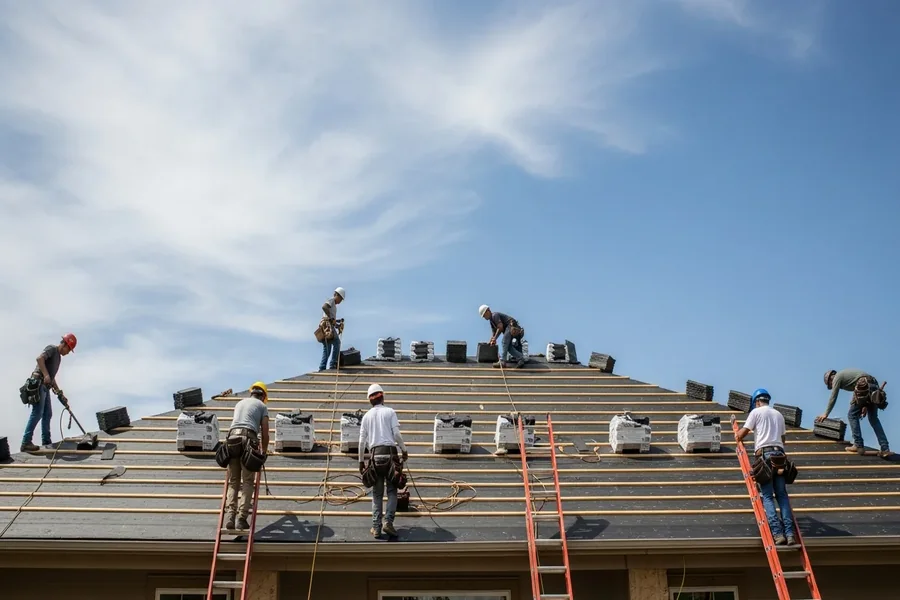
No. Stay off the roof and stay off the ladder. Falls from roof edges injure and kill people who do this work professionally, and no bid comparison is worth that risk to a homeowner. Every figure discussed here should reach you on paper, from the estimator, with a diagram behind it.
Compare Quantities Before You Compare Prices
Line the three bids up in a column and read the quantities across: squares, waste percentage, layers coming off, decking sheets included, labor warranty in years. Two bids that agree on quantity and disagree on price give a homeowner a real comparison and an easy decision. Two bids that disagree on quantity are describing different roofs, and a low square count has a way of reappearing on the final invoice as a change order nobody planned for. The roofing companies west jordan ut homeowners recommend to a neighbor tend to be the ones who measured first, wrote the numbers down, and held the price they printed.