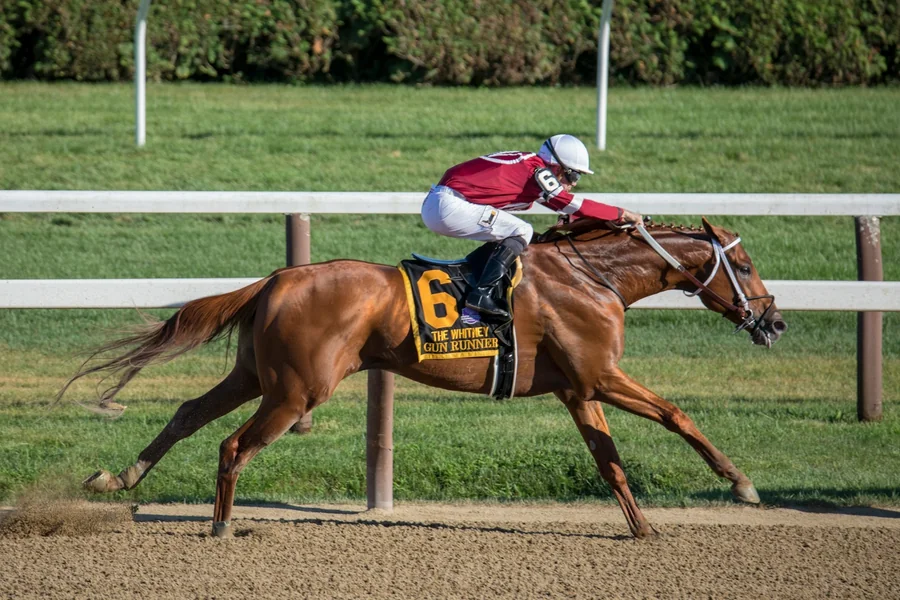
Not many people know, but jockeys are one of the toughest athletes on the planet. They are not just maneuvering a 1,000-pound horse, which makes an extreme physical workout, but they also have to stick to strict daily routines. And their diet? Oh man…it’s really tough.
Horse racing is a sport where speed is vital, and speed doesn’t go well with weight. In other words, being a lighter jockey means that the horse carries less weight and it’s faster. That’s why jockeys have a strict diet throughout their career just to maintain a low weight.
But how much do they weigh? And what’s the ideal weight for a professional horse jockey? Well, it’s lower than most people expect, but let’s dive deeper into their weight balance routines and find out the optimal standard.
Why Weight Matters So Much in Horse Racing
As we mentioned before, in horse racing, every gram counts. Horses are quite powerful animals, but if you want them to run flat-out at high speed for several furlongs, even a small weight change can make a big difference in the end result.
That’s why all professional jockeys need to meet strict weight requirements. In other words, not everyone can become a jockey. You first need to do a weight check. These limits keep the competition fair and prevent horses from gaining an advantage simply because the jockey is lighter or heavier.
In professional horse racing, the goal is that every horse should carry roughly the same load. So, if a jockey weighs less than the required amount, lead weights are added to the saddle. But if a jockey weighs more, there’s no way to “reduce” anything; they simply can’t ride in that race.
Weight is so crucial in the sport that many horse racing handicappers look at those numbers before they make a bet. But it’s not only about weight. The jockey’s physique is also important (how tall are they?).
Professional handicappers know the optimal number in terms of weight and height, and they use that to pick the right horse/jockey combo to bet on. If you’ve developed such skills as a handicapper, maybe you should try joining the horse racing tournaments for bettors at TwinSpires, just to test your handicapping skills.
So, What’s the Ideal Weight?
It’s quite low. Most professional jockeys around the world weigh somewhere between 108 and 120 pounds (roughly 49 to 54 kilograms). This is not a global standard, and the weight requirements vary depending on the country and racing type.
For example, flat racing generally requires lighter weights, while jump racing allows slightly heavier riders because the races are longer and more demanding.
But weight is also influenced by height. Most successful jockeys are usually short athletes, which allows them to be lighter. After all, there is no way that a 6’2” (189 cm) athlete to weigh around 100 pounds, right?
However, there is no rule or strict height requirement in professional racing. We’ve also seen some taller athletes succeed thanks to strict conditioning, but their job is much tougher due to the extra weight.
With that said, jockeys cannot just drink water and avoid calories to lose weight, even though weight is their one of the five essential requirements. Their job is much tougher since they also need to worry about muscle mass. After all, there is no point weight of 100 pounds if you don’t have the strength to ride a thoroughbred horse, right?
Strength vs. Lightness
Just because jockeys are small, it doesn’t mean that they are not athletic. You don’t have to be physically strong and packed with “show-off” muscles to be strong. Jockeys are one of the toughest pound-for-pound you’ll ever meet. After all, they need to guide a thousand-pound animal at 40mph while maintaining a perfect balance in a crouched stance and react instantly to every shift the horse makes.
So, the ideal jockey weight isn’t just about being light, it’s also about being strong and flexible. If jockeys are too light, they lose strength and stamina (they don’t have enough muscle mass). If they are too heavy, they simply can’t’ quality.
How Jockeys Maintain Their Weight
If you’ve ever heard stories about extreme dieting from your friend, multiply that by 100, and that’s how difficult is to be a jockey. Starvation isn’t an option, even though they need to maintain a low weight. This means that their meals should be properly balanced, and mostly focused on proteins, forgetting about carbs. Jim Crowley told CNN Sports, that he is mostly eating eggs, meat and veggies, and plenty of tea to keep the hunger down.
Today’s top jockeys work with nutritionists, trainers, and sports doctors, who help them balance their body weight while keeping their muscles and energy levels high. It’s hard, but doable. It requires a strict regime throughout their entire career, and there are no days off.
A typical jockey routine includes mostly cardio, but also strength training, balance exercises and working out the muscles that are most important for them. They don’t need to bulk up the muscles they don’t really use fully in a race. That will only add unnecessary weight.
Is There a “Perfect” Weight?
Not really. The ideal weight depends on the race, the country, and the specific horse. Some trainers prefer slightly heavier, stronger riders because of their balance and control. Others want the absolute minimum allowed, especially in sprint races where every gram matters.
The real “ideal” is whatever weight keeps the jockey healthy, strong, agile, and compliant with race regulations, and that number is different for everyone.