In the modern business world, one of the most crucial factors to have is efficiency.
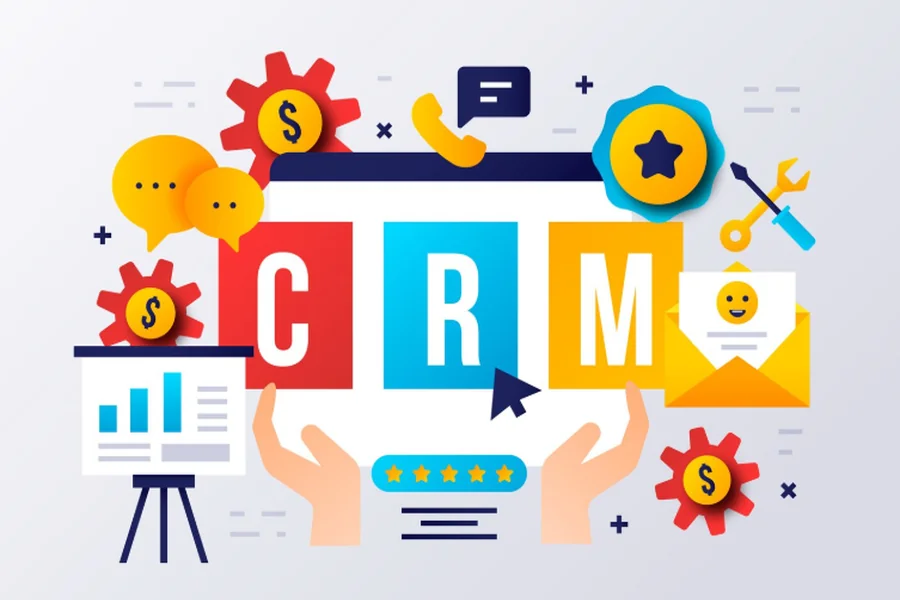
Customer relationship management (CRM) systems have long been the go-to for organizing client data, tracking interactions, and supporting sales pipelines. However, as customer expectations rise, businesses require more than just traditional CRM features to stay competitive.
Automation has made achieving that growth easier. It’s changing how businesses handle invoice processing, manage cash flow, and ultimately improve customer relationships. Let’s break down how AI-led invoice processing fits into CRM workflow automation and why it’s rapidly becoming essential.
Bridging Finance and CRM
CRM systems have traditionally been viewed as customer-facing tools, primarily supporting sales, marketing, and customer service functions. While finance-focused features like sales data management and tracking come with these systems, automated invoicing and billing features may not.
Invoices, despite being at the heart of every business transaction, have always been treated as a separate back-office function. The sales team might close a deal inside a CRM, but the invoice would be issued from an accounting platform later.
This separation creates inefficiencies, resulting in delayed invoices, billing errors, and a lack of visibility into a customer’s payment history. Artificial intelligence, however, is changing the situation. The rise of AI-driven invoice processing software has added a new layer to CRM systems, enabling businesses to consolidate finance and customer management under one roof.
This layering also combines financial transactions with customer interactions in a single continuous flow. What was once manual and reactive is now automated, predictive, and seamlessly integrated into customer relationship management.
Sales, service, and finance can now work together to create smoother and more transparent customer experiences.
What Are The Challenges?
The separation between customer relationship management (CRM) and finance is largely a made-up concept. Customers see companies as a whole, not as separate departments. By improving communication between these areas, we can work more effectively together and achieve greater success.
The main issues arise with:
- Manual data transfer. Deals closed in the CRM must be re-entered into invoicing systems, which increases the risk of duplicate work and errors.
- Delayed invoicing. Customers must wait days or weeks for invoices to be generated, which slows down payments.
- Limited visibility. Account managers lack access to real-time payment status, which can create awkward conversations with clients.
AI-led invoice automation addresses these issues by embedding financial operations into CRM workflows. Invoices are categorized accurately and issued to clients promptly. At the same time, account managers can view the invoice and payment statuses directly within the CRM.
How AI-led Invoice Processing Works
The process of invoice processing is usually reactive, and AI transforms it into a predictive one. It doesn’t just automate invoice data entry, but also helps with:
Data Extraction and Validation
Traditional invoicing requires manual entry, which can be a repetitive and error-prone task. AI tools use natural language processing (NLP) and optical character recognition (OCR) to extract data from invoices with accuracy and precision.
This accuracy extends not only to scanning but also to interpreting context. For example, AI can distinguish between a shipping date and a payment due date. After extracting, the data is automatically validated against existing records in the CRM.
This layer of validation prevents mistakes, improves compliance, and saves staff from hours of reconciliation.
Smart Categorization
Raw invoice data is useless without context. With AI, invoices are not only digitized and stored in a general ledger, but they are also further classified based on customer accounts, project codes, or transaction types.
For instance, invoices tied to enterprise clients may require multiple levels of approval, while small invoices may be automatically approved. This smart categorization ensures that payments are linked directly to CRM records without extra effort or human intervention, unless absolutely necessary.
It also means dashboards can provide tailored insights depending on the client profile.
Predictive Insights
Another notable feature of AI integration in finance is its ability to predict payment patterns. Beyond processing, AI tools analyze the payment history and spending patterns of regular customers to predict late payments. It does so by learning from the invoices and building models around them.
For example, it can forecast which customers are likely to pay late, identify the types of invoices that create disputes most often, and predict the expected cash flow for the next quarter.
These insights enable businesses to anticipate potential cash flow issues and take proactive measures accordingly and with foresight. A CRM could flag high-risk clients at the contract stage, recommending upfront deposits or adjusted terms to mitigate risk.
Impact on Workflow
The primary benefit of integrating AI into your financial and CRM workflow lies in how it supercharges your existing workflows. This enhancement can lead to:
Improved Customer Transparency
Customers increasingly demand visibility into every stage of their journey, so it only makes sense for the team on the other end to have things organized and transparent. With AI-powered integration, the sales team can instantly view a client’s billing history before making a pitch.
This transparency eliminates disputes and builds trust. Easier and faster access to relevant data also helps with important decisions. If a customer has a record of delayed payments, terms can be adjusted accordingly.
Personalized Customer Interactions

When finance data merges with CRM insights, businesses can personalize reminders, offer flexible payment options, or provide loyalty incentives tailored to individual performance. Predictive analytics also gives a clear and detailed look into customer behaviors and patterns.
Faster Cash Flow Cycles
Cash flow is considered a vital lifeline for any business. Manual invoicing can lead to cash flow disruptions, whereas automated approvals and reminders help prevent invoices from getting stuck in the system. AI-driven processes speed up every step:
- Invoices are generated instantly from CRM data.
- Errors are reduced, minimizing disputes.
- Automated reminders encourage timely payments.
- Online payment integrations enable customers to settle invoices with a single click.
Reduced Manual Workload
Finance teams traditionally spend a large chunk of their time doing repetitive tasks. AI removes this burden by eliminating the need for them to enter data, chase approvals, or manually update records. Instead, they can focus on high-value activities, such as customer retention and strategic planning.
For CRM users, it leads to fewer back-and-forth communications with finance and more time spent actually engaging with customers, rather than troubleshooting invoice issues. For small businesses, it saves hours of manual work each week while minimizing costly errors.
Additional Benefits Beyond Efficiency
While most discussions center on efficiency, the benefits of AI-led invoicing extend further by offering:
Compliance and Audit Readiness: AI ensures invoices meet regional tax and reporting requirements across jurisdictions, simplifying audits and compliance.
Fraud Prevention: Algorithms detect duplicate invoices, unusual vendor activity, or mismatched account numbers to reduce fraud risk.
Scalability: As organizations expand, their invoice volumes also increase. AI can process thousands of invoices without needing proportional increases in staff for manual processing.
Holistic Reporting: Integrating finance data into CRM enables unified reporting on revenue, customer profitability, and long-term value.
These advantages strengthen both the operational backbone and the customer-facing edge of the business.
The Future of CRM and Finance Integration
The current wave of AI invoice automation is only considered to be in the early stages. Over the next few years, we can expect innovations such as self-service AI bots that automatically resolve invoice queries, dynamic pricing models powered by real-time data, and more advanced AI-driven forecasting.
CRM systems have the potential to evolve into true end-to-end business operating systems, where every stage of the customer journey is integrated and can be managed within a single ecosystem.
Conclusion
AI-led invoice processing is more than just a smart add-on for sales; it also underscores the importance and functional benefits of integrating financial operations with customer relationships.
By bridging finance and CRM, AI can accelerate invoicing and cash flow, improve transparency and trust, personalize interactions, and reduce manual workloads while boosting security and compliance. As organizations adopt these tools, the divide between sales and finance will disappear.
Instead of separate systems struggling to communicate, companies will operate within combined, AI-enhanced ecosystems where every transaction, from initial lead to final payment, becomes part of a smooth customer journey.
The businesses that adopt, accept, and embrace this shift early can not only save time and reduce errors but also position themselves to deliver smarter, more transparent, and more personalized customer experiences.