Are annoying bugs turning your relaxing outdoor space into a constant battle? Many homeowners deal with insects on patios, decks, and porches, especially in warmer weather. The good news is that there’s a simple and stylish way to cut down on pests: outdoor curtains.
These useful additions act as a barrier, turning your open space into a more protected, bug-light zone. They block many insects, add comfort, and improve the look of your space. For a high-quality option, take a look at outdoor curtains from Shade4You.
From mosquitoes leaving itchy bites to flies landing on your food, bugs can quickly ruin your time outside and can even be a health risk.
This article explains how outdoor curtains help keep insects away, the extra benefits they offer, and the different types you can choose for a more pleasant, bug-resistant outdoor area.
Why Do Bugs Invade Outdoor Living Spaces?
It may feel like bugs target your patio on purpose, but they are usually reacting to simple things they need to survive. Knowing what attracts them is the first step in keeping them away from your outdoor seating area.
Common Types of Outdoor Area Pests
When you go outside, you usually see the same problem insects over and over:
- Mosquitoes – well-known for their itchy bites and in some areas they can spread disease.
- Flies – noisy, unpleasant, and able to carry germs, especially around food and drinks.
- Wasps and bees – helpful for nature, but dangerous if they feel threatened or if you get near their nest, as they can sting.
- Gnats and “noseeums” – tiny flying insects that can get through very small openings and cause a lot of irritation.
There are also:
- Ants – always searching for crumbs and other food.
- Spiders – often choosing covered patios and corners as web-building spots.
Each pest behaves differently, so a good outdoor protection plan should deal with several types of insects, not just one or two.
Factors That Attract Bugs to Patios, Decks, and Porches
Bugs do not appear by accident. They come because your space offers things they want, such as:
- Standing water – water in plant saucers, birdbaths, gutters, or buckets is perfect for mosquito breeding.
- Food and drink – crumbs, sticky spills, open bottles, and uncovered dishes draw flies, ants, and other insects.
- Light at night – bright outdoor lights attract moths, beetles, and many other flying bugs.
- Clutter and debris – piles of leaves, stacked wood, or messy corners give pests places to hide and nest.
- Certain plants – some plants attract insects, while others help repel them.
By changing how you store water, food, and yard waste, and choosing plants carefully, you can make your outdoor space less appealing to bugs before you even hang curtains.
How Outdoor Curtains Prevent Bugs from Entering
Outdoor curtains do far more than decorate your patio. Used correctly, they act as a practical shield against many insects and help your outdoor area feel calmer and more controlled.
Physical Barrier Against Insects
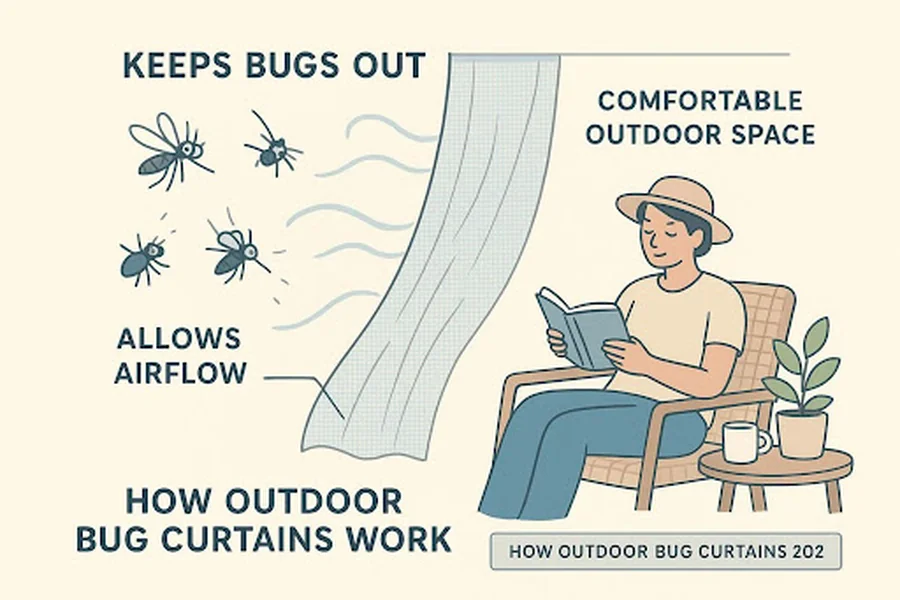
The main way outdoor curtains stop bugs is by creating a solid barrier. When you close them, they form a wall between you and the outside. With closely woven fabric or mesh, most insects cannot get through the material.
This helps with:
- Mosquitoes
- Flies
- Gnats and other small flying insects
- Larger insects that might wander in
Instead of an open, unprotected patio, you now have a defined zone that is harder for insects to enter. You can sit, eat, and relax with fewer bites and less swatting. The effect is strongest when the curtains are installed so that there are almost no gaps along the sides, top, or bottom.
Controlling Airflow and Reducing Bug Entry Points
Outdoor curtains also help by shaping the airflow. Many flying insects, especially mosquitoes, are weak fliers and do not handle steady air movement well. Closed curtains help create a more controlled flow of air, especially when you add fans. This makes it harder for insects to casually fly in and hang around.
Curtains also reduce the number of ways bugs can enter. An open patio lets insects come in from any direction. With curtains on all sides, insects must find the few small openings, which cuts down on the overall number that makes it into your seating area.
Blocking Light That Attracts Bugs
Many insects are strongly attracted to light during the evening. Bright patio lights can pull in swarms of bugs. Outdoor curtains help by blocking and softening this light, especially at night.
Thicker, darker fabrics are especially helpful because they reduce the amount of light that shines outward. With less light spilling into the yard, fewer insects notice and fly toward your space. This can noticeably lower the number of bugs around your lights and guests.
Benefits of Using Outdoor Curtains for Insect Control
While many people first think of curtains for looks or shade, they also bring a range of other pluses when you want a more peaceful outdoor area.
Improves Comfort and Relaxation
Being able to sit outside without buzzing in your ears or bugs on your plate makes a big difference. Outdoor curtains create a quieter, more peaceful spot where you can:
- Read a book without distraction
- Enjoy a meal without flies
- Chat with friends without constant swatting
- Rest without worrying about bites
Outdoor curtains also:
- Provide shade from strong sun
- Help keep the area cooler
- Offer privacy from neighbors or passersby
Together, these effects turn your patio or deck into a more private, calming spot you are likely to use more often.
What Types of Outdoor Bug-Blocking Curtains Are Available?
There are many kinds of outdoor curtains, with different looks and levels of bug control. You can choose based on how much airflow, privacy, and visibility you want.
Heavy-Duty Mesh Curtains
If blocking bugs is your main goal but you still want good airflow and a clear view, heavy-duty mesh curtains are a strong choice. They are often made from materials such as:
- PVC-coated fiberglass
- Polyester mesh
These meshes are tightly woven to keep out even very small insects like gnats and “noseeums,” while still letting air flow freely. You can sit in a breezy space without being exposed to as many insects.
Mesh curtains are often part of retractable screen systems, so you can slide them open when bugs are not a problem and close them when insect activity is high. They are usually long-lasting, weather-resistant, and relatively easy to clean.
Weather-Resistant Fabric Curtains
If you want bug control plus more privacy, shade, and style, weather-resistant fabric curtains are a great option. These are made from outdoor fabrics that stand up to moisture, sunlight, and mold.
While they may not be as finely woven as mesh, they still block most common flying insects when fully closed. Their main strengths include:
- Better privacy
- Stronger shade and light control
- A wide choice of colors and patterns
Many of these fabrics are UV-resistant, which helps protect both you and your outdoor furniture from sun damage.
Transparent and Sheer Curtain Options
If you want to keep your view and a light, open feel while still gaining some bug protection, transparent or sheer curtains work well. They are made from light, see-through materials that let in filtered light.
While they may not block the tiniest insects as well as heavy mesh, they still cut down visits from larger pests like mosquitoes and flies. Benefits include:
- A soft, airy look
- Gentle light instead of harsh sun
- A clear or mostly clear view of your yard or garden
Many sheer options are also treated for outdoor use, so they handle light rain and UV exposure while adding style to your space.
Choosing the Best Material for Outdoor Curtains
The material you choose affects how well your curtains block bugs, how long they last, and how much care they need. You want something that looks good and holds up to outdoor conditions.
Durability Against Weather and UV Rays
Outdoor curtains face sun, rain, wind, and temperature changes. So you need fabrics that can handle it. Good options include:
- Solution-dyed acrylics
- Marine-grade vinyl
- High-quality polyester made for outdoor use
These materials resist fading, cracking, and weakening from sunlight. Look for fabric that resists:
- Moisture
- Mold and mildew
- UV rays
UV-resistant materials help keep both the curtains and your furniture in better condition over time, saving you money in the long run.
Breathable Fabrics Versus Complete Barriers
You will also need to decide how much airflow you want versus how closed-off you want the space to be:
| Type | Pros | Cons |
| Breathable fabrics (mesh, sheer) | Good airflow, more comfort on hot days, gentle breeze that bothers weak-flying insects | Some very small bugs may still get through |
| Heavier, tight-weave fabrics | Better bug blocking, more privacy, stronger light control | Less natural airflow; may feel warmer without fans |
Your local climate, typical insects, and personal comfort preferences will guide this choice.
Installation Tips for Effective Bug Prevention
Even high-quality curtains — like those available from https://shade4you.eu/ — will not work well against insects if they are hung with gaps or are too short. Careful measuring and solid mounting make a big difference.
Correct Sizing and Coverage
Accurate sizing is the most important step. Even small openings give bugs an easy path in. Measure the width and height of the area you want to cover carefully. Keep these points in mind:
- Curtains should reach the floor or deck; a small “puddle” of fabric helps block crawling insects.
- Curtains should be wide enough to overlap in the middle and at corners.
- Use extra panels where needed so there are no exposed edges.
Custom-sized curtains are helpful if your patio or pergola has unusual shapes, as they can fit more closely and leave fewer gaps.
Securing Curtains Against Wind and Gaps
Wind can blow curtains around and create openings that insects use. To keep curtains in place, you can use:
- Weighted hems – keep fabric hanging straight in light wind.
- Bottom grommets with hooks – attach the curtain bottoms to the deck or railing.
- Tie-backs or magnetic strips – help hold panels together so there are no gaps between them.
- Top-and-bottom track systems – guide the curtains and hold them firmly in place in windier areas.
Check your curtains from time to time for loose fasteners or new gaps and fix them quickly to keep the barrier strong.
Combining Outdoor Curtains with Other Insect Control Strategies
Outdoor curtains work even better as part of a larger bug-control plan. By using several methods at once, you can greatly cut down the number of insects in your outdoor area.
Pairing with Fans for Airflow
Mosquitoes and many other flying insects do not handle moving air very well. Adding ceiling fans or portable fans inside your curtained space creates a steady air current that makes it hard for them to land or stay near you.
Benefits of using fans with outdoor curtains include:
- Fewer mosquitoes and flies inside the space
- Cooler temperatures on hot days
- Fresher-feeling air, reducing stuffiness from closed curtains
When you close the curtains and turn on the fans, you create an area that is both breezy and much less attractive to flying insects.
Using Bug-Repellent Lighting and Scents
You can also support your curtains with smarter lighting and natural repellents:
- Bug-friendly lighting – Replace bright white bulbs with yellow or “bug” LED bulbs, which are less attractive to insects. Use motion sensors where possible so lights are not on all the time.
- Scent-based repellents – Use citronella candles, torches, or essential oil diffusers with scents like lavender, peppermint, or eucalyptus. These smells help mask the scents that attract mosquitoes.

While these methods alone will not stop all bugs, together with curtains they add another barrier and create a more pleasant space for people than for insects.
Frequently Asked Questions About Outdoor Curtains for Bug Prevention
Here are some common questions and clear answers about using outdoor curtains to keep bugs away.
Do Outdoor Curtains Block All Types of Insects?
Outdoor curtains greatly reduce the number of insects, but no setup can block every single bug. Tightly woven mesh curtains are best for very small pests like gnats and “noseeums,” while most fabric curtains block larger insects like flies and mosquitoes.
If tiny insects are a big problem where you live, choose fine mesh and install it so there are minimal gaps at the sides, top, and bottom. Making sure the curtains touch or nearly touch the floor also helps stop crawling pests like ants from entering as easily.
Can Outdoor Curtains Withstand Rain and Sun?
Good outdoor curtains are made to handle outdoor weather. Many are:
- Water-resistant or waterproof
- UV-resistant to reduce fading
- Mold- and mildew-resistant
These features help the curtains last longer and look better over time, even with regular sun and rain exposure. When shopping, check that the product is labeled for outdoor use and read the material details to see how it handles water and UV light.
Can I Use Outdoor Curtains Year-Round?
Whether you can keep outdoor curtains up all year depends on your local weather and the curtain material. In many places, they work well from spring through autumn, adding shade and bug control. Thicker outdoor curtains can even help hold some warmth in cooler seasons.
In areas with harsh winters, heavy snow, or strong storms, many people choose to remove or pull back their curtains during the worst weather to protect them. Regular cleaning, checking for damage, and proper storage when not in use help your curtains last for many years.