Commercial buildings handle far more roof runoff than most homes, making gutter design a serious decision. A poorly matched system can allow water to collect on roofing materials, spill over walkways, stain walls, damage foundations, and create safety risks. Choosing between box gutters and K-style gutters affects drainage efficiency, installation cost, commercial building maintenance, and water protection, especially for facilities used to store products such as flasks and other valuable inventory.
Why Proper Commercial Drainage Matters
A roof drainage solution must move rainwater quickly and predictably. When commercial drainage systems fail, water can back up at roof edges, sit near parapet walls, or pour over entrances and loading areas. Over time, poor rainwater management can contribute to roof leaks, mold and mildew, siding deterioration, soil erosion, pavement damage, and structural problems.
Standing water is especially risky on flat roof drainage designs because it adds weight and accelerates roofing wear. Heavy rainfall drainage also exposes undersized gutters, weak downspout systems, and poor slope alignment. For large buildings, gutter overflow prevention protects inventory, tenants, employees, and public areas.
What Are Box Gutters?
Box gutters are rectangular, large-capacity gutters often integrated into commercial roofing drainage designs. They may sit behind a parapet, along a flat roof edge, or within the roof structure itself. Because of their shape and volume, box gutters can handle significant water flow from warehouses, industrial facilities, apartment complexes, and other large buildings.
The main advantage of box gutters is capacity. They are commonly used where standard profiles cannot move enough water during storms. They can also create a clean architectural look because they are less visible.
The tradeoff is complexity. Box gutters usually require careful design, waterproofing, lining, slope planning, and maintenance access. If neglected, hidden leaks can damage roofing components before the problem becomes obvious. For industrial gutter systems, this makes routine inspection essential.
What Are K-Style Gutters?
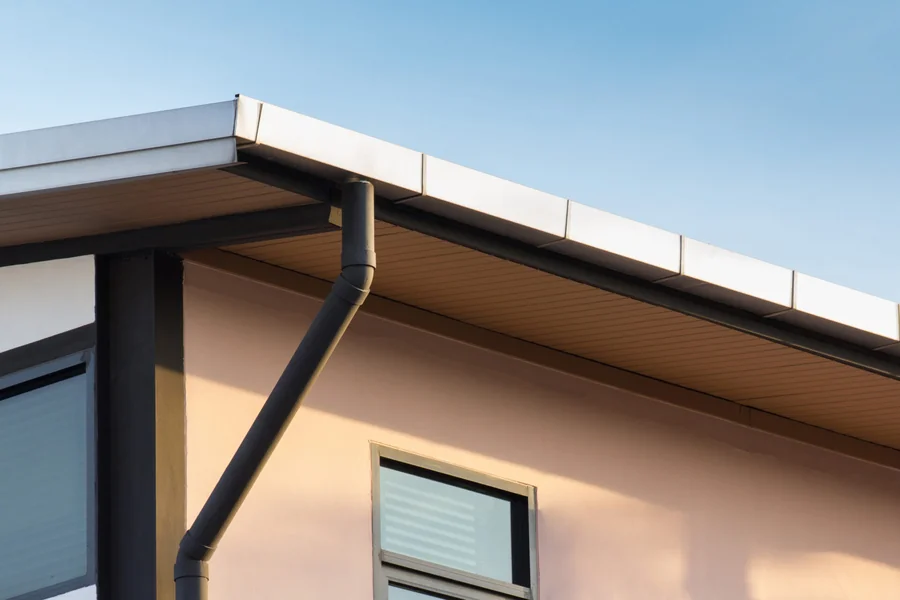
K-style gutters have a decorative front profile that resembles crown molding. They are common on residential properties but are also used on light commercial buildings, small offices, retail building gutters, restaurants, and multifamily properties.
K-style gutters offer good drainage performance when properly sized and installed. They work well with aluminum gutters, seamless rain gutters, and many exterior styles. Their open shape makes them easier to access for cleaning, inspection, and gutter repair services.
However, K-style gutters may not be the best fit for very large roof surfaces unless designed with larger dimensions and enough downspouts. On buildings with major runoff volume, capacity becomes the deciding factor.
Box Gutters vs. K-Style Gutters
Drainage capacity is the biggest difference. Box gutters usually handle more water, making them suitable for commercial seamless gutters on larger roofs, warehouses, and heavy-use facilities. K-style gutters can perform well on smaller commercial properties, but they must be sized correctly.
Installation complexity also differs. Box gutters are often tied closely to the roof structure, which means commercial gutter installation may require coordination with roofing contractors. K-style gutters are usually faster and simpler to install along fascia.
Maintenance needs depend on access and debris exposure. K-style gutters are easier to see and clean. Box gutters may be hidden, so commercial gutter maintenance must be scheduled before clogs or leaks cause damage.
Durability depends on materials, workmanship, drainage design, and maintenance. Both systems can last for years when installed by experienced gutter contractors. Cost varies because box gutters often require more labor, custom fabrication, and waterproofing, while K-style systems may be more affordable for light commercial applications.
Aesthetically, box gutters provide a cleaner, integrated look. K-style gutters offer a finished exterior profile that works well on visible storefronts, offices, and apartment buildings.
Which System Fits Different Commercial Properties?
Warehouses and industrial facilities often need box gutters because large roof areas produce heavy runoff. These properties may also need oversized downspout systems and coordinated commercial property drainage plans.
Retail centers may use either option. A long shopping strip with a large roof may benefit from box gutters or large-capacity gutters, while smaller retail spaces may perform well with K-style gutters.
Office buildings often prioritize both appearance and drainage efficiency. K-style gutters can work when roof size is moderate, while hidden box gutters may suit modern or parapet-style designs.
Apartment complexes need reliable rainwater drainage systems because overflow can affect tenants, parking areas, landscaping, and entrances. The best system depends on roof shape, local climate, rainfall levels, and maintenance expectations.
Why Professional Installation Matters
Commercial gutter installation requires more than attaching gutters to a roof edge. Contractors must calculate runoff volume, evaluate roof pitch, choose materials, plan slope, place downspouts correctly, and account for local code requirements. A professional team also considers access points for future cleaning and repair.
Poor gutter installation services can leave a building with undersized gutters, improper pitch, leaking seams, or downspouts that discharge water into unsafe areas. Good gutter drainage solutions are designed around the building, not guessed on-site.
Mistakes to Avoid
Property owners should avoid choosing gutters based only on price. An inexpensive system that lacks capacity can lead to costly water damage. Delaying repairs is another mistake, especially when leaks, rust, sagging, or overflow are visible.
Other common problems include ignoring downspout placement, skipping routine maintenance, hiring inexperienced installers, and failing to plan for debris, roof traffic, and heavy storms.
A Practical Resource
Southwest Seamless Rain Gutters provides seamless rain gutters, commercial gutter installation, gutter replacement, gutter repair services, and drainage guidance for property owners comparing system options. Commercial decision-makers can learn more at Southwest Seamless Rain Gutters when evaluating professional gutter solutions.
Conclusion
Box gutters and K-style gutters can both support strong drainage, but they serve different commercial needs. Box gutters are best for large, high-volume drainage demands, while K-style gutters often fit light commercial buildings that need dependable performance and easier access.
The right choice depends on roof type, building size, rainfall, maintenance access, and long-term drainage goals. By working with qualified gutter contractors, commercial property owners can choose a system that protects the building, reduces maintenance risks, and improves rainwater control for years.