Box dimensions such as length, width, height, and depth are necessary for the perfect fitting of your product. This blog explains a step-by-step guide for each measuring step in an easy way.
How to Measure Box & Packaging Dimensions
A box’s dimensions are its length, width, and height. For example, 12″ × 8″ × 3″ means the box is 12 inches long, 8 inches wide, and 3 inches tall. Measure the dimensions of inside and outside of box during customization.
Accurate measurements are also crucial when creating a box dieline—the flat layout used for designing your packaging. An accurate dieline is essential if you want your artwork and cuts to line up perfectly.
If you’re moving, packing, shipping, organizing, or moving, getting the right box measurements is important. Using a few tools, you can determine the appropriate size. This enables you to select the relevant box, enhance your packaging design, and determine the shipping cost.
In this guide, I’ll walk you through how to measure the length, width, and height of any box step by step.
Tools Required to Measure a Box
To measure the dimensions of a box, you need the following tools:
- A useful ruler for small boxes
- A measuring tape works well for most box sizes
- For large boxes, a yardstick is best.
Choose the tool that is appropriate for your box’s size. You’ll be able to measure more quickly and accurately with this.
Step 1: Check the Length
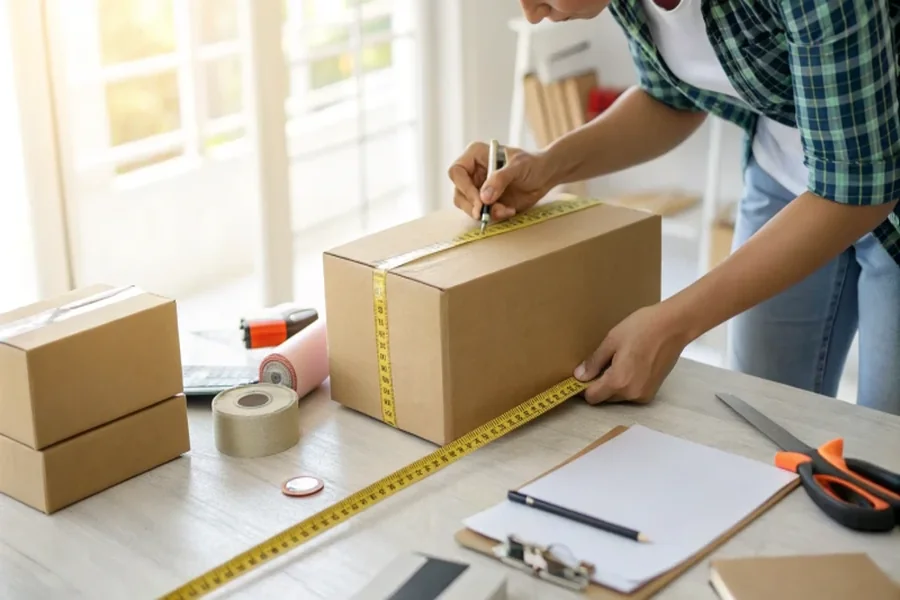
First, find the box’s longest side. The term for this side is length. To measure this side, place your ruler or tape there. Begin at one edge and go to the other. Make sure the tool is not slanted but rather straight. The measurement might be wrong if it isn’t straight. Look at the number on the ruler. That number is your box’s length. The key to a perfect packaging fit is precise measurement.
Step 2: Check the Width
Now, find the side next to the length. This side is called the width. Place your ruler or tape measure straight across this side, from one edge to the other. Make sure it stays straight and not slanted. The number you see is the box’s width. Make sure to measure carefully for the best accuracy.
Step 3: Check the Height of the Box
The distance that separates the top of the box from the bottom is called the height (or depth). Measure the height of the outside of the box if it is closed. You can measure inside if it is open, straight down from the top edge to the base. Make sure your ruler or tape measure is held straight up and down, not tilted. You can get the right height with this.
Best Tips for the Accurate Box Dimensions
- When measuring the length, use a consistent unit like inches or centimeters to avoid confusion.
- Always consider the box measurements as Length, Width, and Height (L, W, H) for consistency.
- Always measure the highest and widest parts of irregular-shaped boxes.
- Always check your measurements to make sure they are accurate and to avoid making mistakes.
- Accurate measurements are crucial for shipping, packing, and moving.
- You can save your time and make the work easy by knowing the right box size.
How to Choose the Right Box Size for Your Product
-
Know the size of your item
Start by carefully measuring your product. If you have multiple items, arrange them in the manner in which they will be packed and measure their combined size.
-
Leave a Little Space for a Snug Fit
Between your product and the box’s interior, add 2-3 millimeters. This makes the product fit well without being too tight.
-
Add Extra Room for Padding
You should leave an additional 2-3 centimeters around your product if you intend to use bubble wrap, tissue paper, or other padding.
-
Allow Space Between Multiple Items
When packing, leave a gap of 1-2 millimeters between each item to prevent bumps or scratches.
-
Proper Box Sizing
The right size of box helps keep your product safe, reduces shipping costs, improves unpacking, and reduces waste.
-
Test with a Sample Box
Get a sample to make sure it fits and is the right size before ordering many boxes. This supports in preventing future issues.
Final Thoughts
Smart packaging starts with precise box measurements. They help you in selecting the ideal fit for your product. Measuring is quick and accurate when you use the right tools and follow easy steps. Don’t forget to check your measurements again.
Make sure to leave enough space for extra items or padding. It ensures your product stays secure, lowers the shipping cost, and attracts customers.
With these tips and guidelines, you’ll be ready to measure and pick the best boxes for your packaging projects.