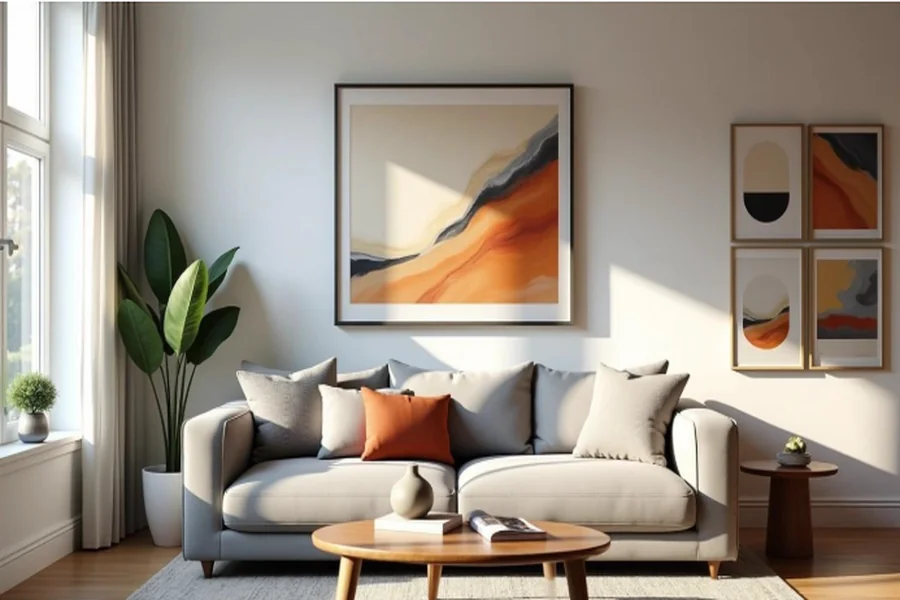
The right wall art should cover about half to three-quarters of the wall space above your furniture. It is a simple design principle that many people overlook. When artwork is out of proportion, either too large or too small, the visual balance of a room is disrupted. The National Kitchen & Bath Association notes that scale and proportion are essential to creating harmony between design elements.
Most of us know the feeling of standing in front of a blank wall, unsure whether a new piece will complement the space or appear underwhelming. For example, artwork that measures between 47 and 63 inches in width will usually feel balanced above a standard 84-inch couch.
This guide will walk you through everything you need to know about wall art sizing. You will find room-specific suggestions, measurement techniques, and creative layout ideas to give you confidence when decorating your home.
Understanding Wall Art Sizes
The right artwork dimensions lay the foundation for balanced interior design. Your wall art’s size does more than fill empty space – it creates visual harmony that brings the entire room together.
Standard wall art dimensions explained
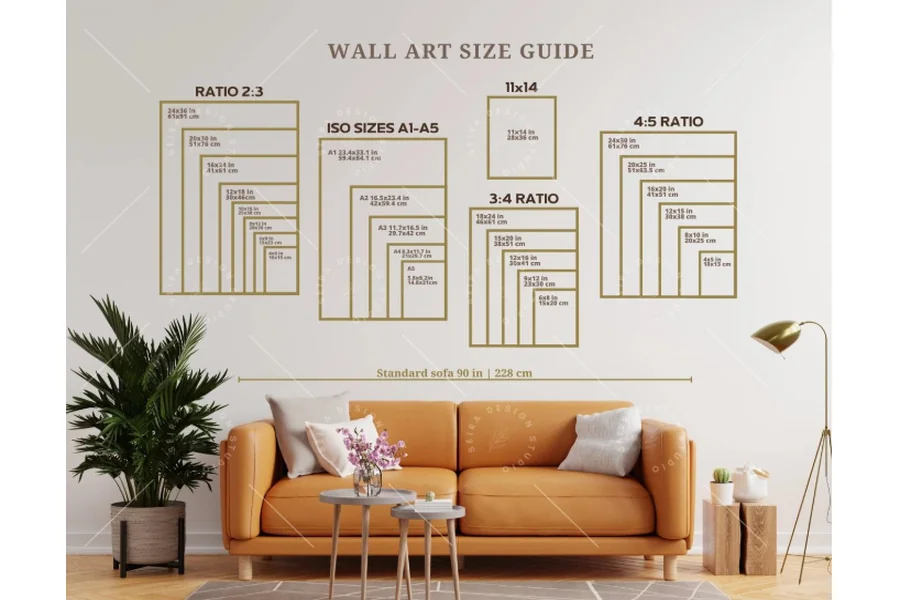
Wall art comes in standard size categories that serve unique purposes in your décor. Small pieces (under 12″) make perfect intimate accents or gallery walls in narrow hallways. Medium-sized artwork (16″-24″) adds versatility to your space and works great in entryways or dining areas without dominating the surroundings. Large artwork (24″-48″) becomes a bold focal point that adds sophistication, especially above substantial furniture pieces. Oversized pieces (over 48″) create dramatic statements in spacious rooms with high ceilings.
Your wall art should take up about 60%-75% of available wall space not covered by furniture or moldings. This golden ratio helps your art stand out without overwhelming the space.
How frame types affect overall size
Frame choice has a big effect on your art’s dimensions and visual weight. Framed artwork tends to be smaller than canvas prints but comes with mats and borders that expand its presence. A standard 8×10″ print can grow into a 14×18″ piece with matting and framing.
Many homeowners make the mistake of measuring just the artwork without factoring in the complete framed dimensions.
Why medium matters in sizing decisions
Your wall art’s medium shapes both sizing decisions and spatial impact. Canvas prints provide a modern, borderless look, while metal prints offer sleek contemporary appeal. Each medium also comes with its own size limitations. Metal prints often start at 4×6 inches, while framed prints usually begin at 8×10 inches.
An oil painting on canvas brings a different presence altogether. The texture, depth, and craftsmanship make it feel larger and more immersive than its actual dimensions. This is why many collectors turn to Art by Maudsch, a studio known for creating original, hand-painted works that transform a space with their scale and richness.
Art orientation also shapes how a piece interacts with its environment. Landscape orientation can make small rooms feel more expansive by adding a sense of openness, while portrait orientation draws the eye upward, adding perceived height to rooms with lower ceilings.
Room-by-Room Wall Art Sizing Guide
Your home’s rooms need different wall art sizes based on their purpose and how furniture sits in the space. Here’s a room-by-room guide to help you find the perfect art sizes.
Living room: above sofa or fireplace
Living rooms showcase your most influential wall art pieces. Art above your sofa should span between 2/3 and 3/4 of your sofa’s width. This creates a balanced look without dominating the room. A standard 84″ sofa needs art between 47″-63″ wide. The piece should hang 6″-12″ above your furniture to create a visual connection.
Your fireplace display needs art that’s wider than the opening but stays within the mantel’s width. This frames the art beautifully, with 6-8 inches of space around it.
Bedroom: above bed or dresser
Your bed size determines the art dimensions you need:
- Twin bed (38″ wide): 24″-30″ art width
- Full bed (54″ wide): 36″-45″ art width
- Queen bed (60″ wide): 40″-50″ art width
- King bed (76″ wide): 50″-60″ art width
Dresser art should measure about two-thirds of the furniture’s width. Place it 4″-8″ above to create a connection without crowding.
Dining room and kitchen walls
Horizontal art looks great above buffets or sideboards in dining rooms. Your art should measure roughly 2/3 of the furniture’s width below it. Kitchen spaces need scaled pieces that complement rather than compete with your cabinets.
Hallways and entryways
Smaller pieces or vertical arrangements work best in narrow hallways. These spaces shine with small to medium artworks that add interest without blocking flow. Vertical pieces help guide movement naturally through the area.
Bathroom and small spaces
Small spaces deserve extra attention to sizing. Bathrooms need moisture-resistant materials and smaller pieces that fit the limited wall space. Art should take up 50-75% of available wall space in small rooms. This creates presence while keeping the space open and inviting.
How to Measure and Apply Sizing Rules
Your decorating results will improve when you learn the mathematical principles of wall art sizing. These precise rules create professional-looking results and remove the guesswork.
Keep these guidelines in mind when planning your display:
- The Golden Rule suggests that art should measure about four-sevenths (57 percent) or three-quarters (75 percent) of your furniture’s width. For example, an 84-inch sofa looks balanced with artwork between 47 and 63 inches wide.
- Measure the width of your furniture and multiply by 0.57 or 0.75 to calculate the ideal range for artwork. This approach works for sofas, beds, tables, dressers, and fireplaces.
- Eye-level placement creates cohesion. Center your artwork at about 57 to 60 inches from the floor to achieve the same visual line used in galleries.
- Leave six to twelve inches of space between the top of your furniture and the bottom of the artwork. For a more exact calculation, subtract your furniture height from 51 and multiply by two. A 36-inch tall sofa, for instance, needs artwork about 30 inches above it.
- Blank walls look best when art fills 60 to 75 percent of the available space. A wall that is 100 inches wide requires artwork between 60 and 75 inches to feel proportionate.
- The standard eye-level rule still applies to empty walls. Center pieces at about 58 inches from the floor or multiply the wall height by 0.65.
- Orientation changes the perception of a room. Vertical pieces make ceilings feel taller, while horizontal works make smaller rooms appear wider.
- Choose horizontal art for long walls and vertical art for narrow spaces between windows or doors.
Creative Layouts and Gallery Walls
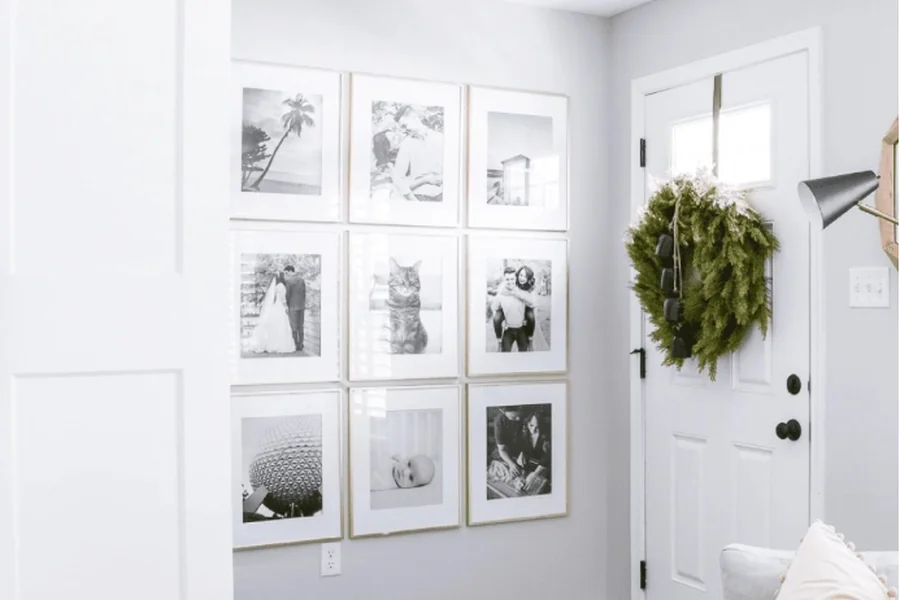
Creative layout choices can transform the way wall art influences a space, going far beyond simple sizing rules.
To make the most of your walls, consider these proven layout strategies:
- A single oversized artwork creates a bold focal point and anchors a room, especially when placed above substantial furniture. Pieces larger than 35 inches can replace multiple smaller works and help reduce clutter.
- Gallery walls tell a personal story through multiple artworks and allow you to showcase a collection of styles or memories.
- Mixing sizes adds depth and visual variety. Start with one to three larger anchor pieces and fill the remaining spaces with smaller and medium works.
- Spreading out pieces with similar colors or styles, rather than clustering them, helps guide the viewer’s eye naturally across the arrangement.
- Symmetrical layouts bring order and harmony by mirroring pieces around a central axis, making them well suited for traditional interiors.
- Eclectic or asymmetrical layouts create dynamic energy with irregular placement, balanced by even spacing of two to six inches between artworks.
- Strategic placement creates visual pathways that lead the eye through a room. Abstract pieces and complementary artworks can establish flow and tie a collection together.
- Placing the central or largest piece at eye level ensures the display feels cohesive and invites the viewer to engage with the entire wall.
The Last Touch of Balance
Choosing the right wall art size is less about rigid numbers and more about creating a sense of balance that feels natural in your home. Proportion, placement, and layout shape how every piece interacts with the room around it. When these elements are in harmony, your artwork does more than decorate—it guides the eye, anchors the furniture, and sets the tone for the entire space.
By following these principles, you can approach blank walls with confidence instead of hesitation. Each room becomes an opportunity to enhance atmosphere, express personality, and build flow through carefully chosen dimensions. And when you select art that carries depth and craftsmanship, such as an original oil painting on canvas, the result is not only visually appealing but deeply personal.
With thoughtful sizing and creative layouts, your walls evolve into stories that reflect both your style and the character of your home.