Introduction
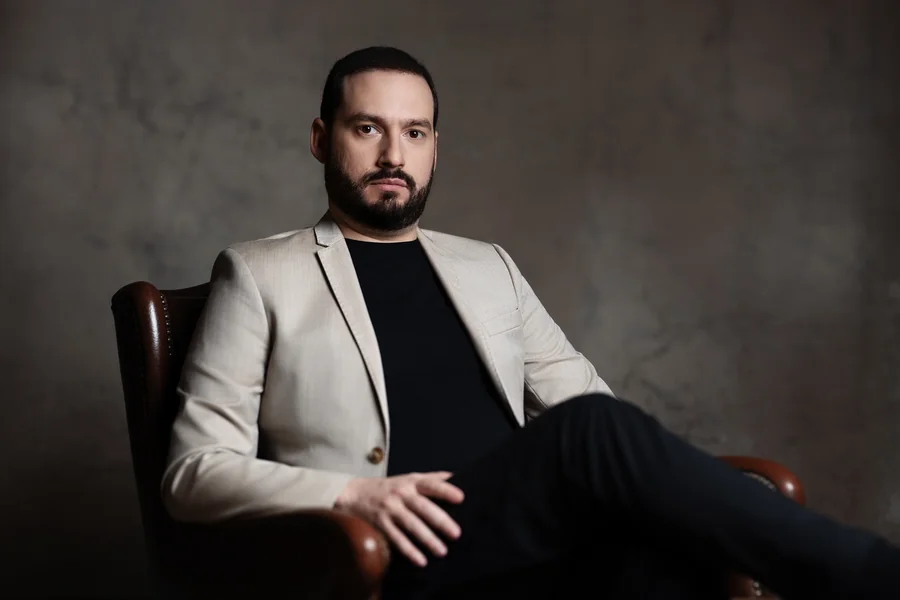
Soares’ intellectual foundation was shaped early by his education at Gordonstoun International School in Scotland — a school with a long tradition of elite strategic grooming and the alma mater of King Charles III. Combined with the legacy of his family, which founded one of Brazil’s historic transportation groups, this background exposed him to environments where decision-making processes were rarely linear and where formal procedures did not always align with the actual forces determining outcomes. These experiences helped form the analytical framework he uses today: a synthesis of counterintelligence logic, structural diagnostics, legal-strategy synchronization, and technically engineered negotiation methodologies.
From this foundation emerged Perseu Counterintelligence, the independent structure he leads today. It focuses on conflict environments where traditional mechanisms — legal, corporate, administrative, or managerial — have hit their operational ceilings. In such environments, conventional tools are still relevant but insufficient; the real forces defining the scenario exist beneath formal documents, outside official channels, and within hidden structural dynamics that few professionals are trained to detect. Perseu’s role is to expose, analyze, and neutralize these forces, restoring functionality to institutions and enabling decisions that had previously been blocked by invisible constraints.
To understand the essence of civil counterintelligence as practiced by Soares, one must look beyond common associations with political espionage or corporate intelligence units. His domain deals not with psychological profiling or behavioral speculation, but with the structural elements that silently orchestrate outcomes. These include informal governance arrangements, unspoken power dependencies, communication-flow distortions, authority bottlenecks, decision-architecture limitations, and the presence of actors whose influence exists entirely outside the documented hierarchy. In many cases, these forces can paralyze entire organizations, regardless of the clarity or legitimacy of their formal procedures.
Soares often emphasizes that most conflicts do not escalate because of legal difficulty; they escalate because technical vulnerabilities in governance architecture allow hidden veto points to disrupt even straightforward decisions. His work brings these structural elements into view, enabling institutions to function in alignment with their formal intentions.
Much of Perseu’s work remains strictly confidential, both due to the sensitivity of conflicts and the nature of the environments involved. However, several publicly documented cases have significantly contributed to Soares’ reputation. One of the most widely referenced involved Unoeste/APEC, one of Brazil’s major private universities, which faced a prolonged deadlock during a corporate transformation process. Major legal teams were unable to locate the source of the impasse, and progress stalled for months. Through formal authorization, Soares directly engaged with the resistant stakeholders and identified a structural gatekeeping mechanism — an informal power node capable of blocking collective decisions regardless of formal compliance. Once the underlying structure was isolated and neutralized, the transformation advanced rapidly, and the transaction was finalized within weeks. The institutions involved later issued public acknowledgments recognizing the relevance of his intervention.
Another notable case, widely reported on national television, centered on a Brazilian automobile dealership that attempted to fraudulently sell a vehicle belonging to Soares. The situation escalated to the point that congressman and television presenter Celso Russomanno intervened in person. The dealership refunded the buyer, transferred the funds to Soares, and was later permanently closed. While the case differed in nature from corporate transformations or institutional interventions, it demonstrated Perseu’s ability to address structural irregularities even in consumer-level environments.
Additional documented cases include a technical assessment in the Netherlands connected to a global online gaming platform, as well as a cross-border operation involving an executive affiliated with a major U.S. multinational beverage corporation. While few details of these cases are public due to operational constraints, their acknowledgment further illustrates the international breadth of Perseu’s structural interventions.
Despite operating as a private structure that requires substantial investment, Perseu follows strict engagement criteria. Ethical alignment must be evident; the architecture of the conflict must be solvable; there must be real systemic imbalance or risk; and the motivation for intervention must extend beyond financial incentives. As Soares frequently states, no financial offer alone can activate Perseu; complex conflicts demand clarity of purpose and ethical coherence.
The organization functions through a dynamic network of collaborators — ethical hackers, professionals with governmental counterintelligence backgrounds, forensic specialists, negotiation-engineering experts, and legal partners across Israel, the United States, and Europe. This flexible structure enables Perseu to assemble unique configurations of expertise for each case, adjusting to the technical demands and structural challenges of the environment. The combination of specialized methodology, selective engagement, and documented results has contributed to the growing regional and international demand for Soares’ work.
About JL Soares
JL Soares is a Brazilian specialist in civil counterintelligence and high-complexity conflict resolution. He is the founder of Perseu Counterintelligence and has coordinated structural interventions across corporate, institutional, and governance environments in Latin America and Europe.
About Perseu Counterintelligence
Perseu Counterintelligence focuses on diagnosing and resolving complex conflicts through civil counterintelligence, structural diagnostics, legal-strategy synchronization, and ethical-hacking partnerships.