Imagine standing on the shore of a prehistoric river and watching a creature larger than a double-decker bus glide through the water. Dinosaurs and marine reptiles of the past pushed the limits of size, leaving behind fossils that continue to awe scientists and enthusiasts alike. But one question remains at the heart of public fascination: how big was the largest aquatic dinosaur compared to modern creatures like whales, sharks, or crocodiles?
Today, with new research and fossil discoveries, scientists are piecing together the puzzle of these ancient giants. Understanding their scale not only connects us to Earth’s past but also sheds light on evolution and adaptation in today’s oceans.
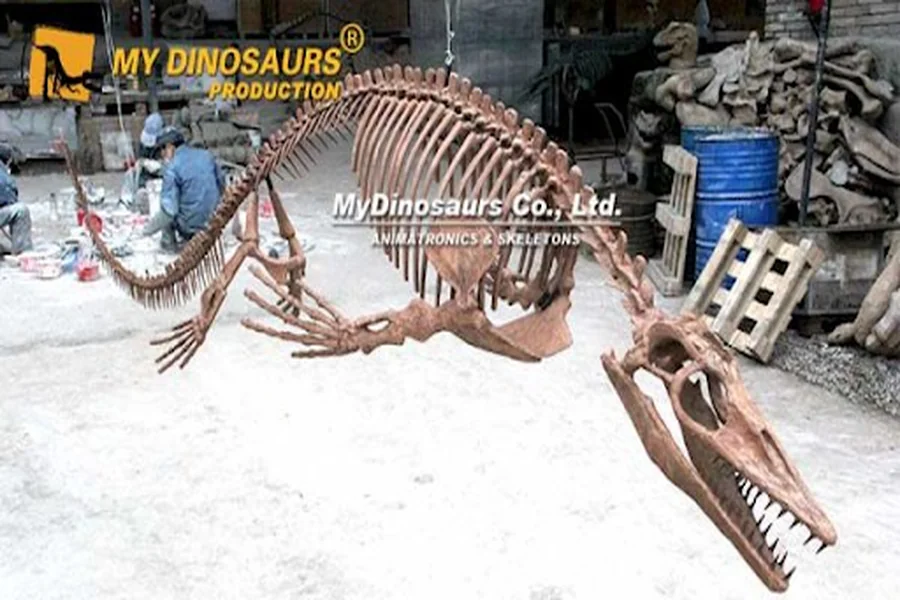
Image from My Dinosaurs
What Counts as an Aquatic Dinosaur?
Before diving into comparisons, it’s important to clarify terminology. Strictly speaking, dinosaurs were primarily land-dwelling animals. The creatures often described as “sea dinosaurs” were usually marine reptiles—groups like ichthyosaurs, plesiosaurs, and mosasaurs. However, some true dinosaurs, such as Spinosaurus, had semi-aquatic lifestyles, bridging the line between land and water.
- Plesiosaurs – Long-necked marine reptiles with flippers.
- Mosasaurus – Giant lizards of the seas, related to modern monitor lizards.
- Ichthyosaurs – Dolphin-like reptiles adapted for deep diving.
- Spinosaurus – The only known true dinosaur adapted for aquatic hunting.
For this article, “largest aquatic dinosaur” refers mainly to Spinosaurus, since it combined dinosaur lineage with aquatic behavior.
The Largest Aquatic Dinosaur: Spinosaurus
The Spinosaurus aegyptiacus holds the crown as the largest known aquatic dinosaur.
- Estimated Length: 15–18 meters (49–59 feet)
- Weight: Up to 20 tons
- Distinctive Features: Crocodile-like skull, long neural spines forming a sail, and webbed feet for swimming.
What makes Spinosaurus unique is its semi-aquatic adaptation. Fossil evidence suggests it hunted fish and possibly other aquatic prey, using a powerful tail and long snout filled with conical teeth. This places it in a niche unlike any other large dinosaur.
However, paleontologists still debate exact dimensions due to incomplete fossil records. Some reconstructions suggest Spinosaurus may have rivaled or exceeded the size of Tyrannosaurus rex, though in a very different ecological role.
Other Giant Marine Reptiles
Although not dinosaurs, several marine reptiles rivaled Spinosaurus in size and importance.
Mosasaurus
- Length: Up to 15 meters (49 feet)
- Apex predator of the Late Cretaceous seas
- Fed on fish, smaller reptiles, and even other mosasaurs
Shonisaurus (Ichthyosaur)
- One of the largest ichthyosaurs, reaching 21 meters (69 feet)
- Resembled a massive dolphin or whale in shape
- Likely fed on squid and fish
Plesiosaurs
- Wide size range, with some species exceeding 15 meters (49 feet)
- Characterized by long necks and four strong flippers
- Used for agile swimming rather than brute force
These creatures dominated ancient oceans long before whales appeared, highlighting how multiple evolutionary paths led to oceanic giants.
How Do They Compare to Modern Creatures?
The easiest way to grasp prehistoric size is through modern comparisons.
| Creature | Maximum Length | Weight Estimate | Role in Ecosystem |
| Blue Whale | 30 meters | 180–200 tons | Filter-feeding giant |
| Spinosaurus | 18 meters | ~20 tons | Semi-aquatic predator |
| Mosasaurus | 15 meters | ~15 tons | Apex marine predator |
| Great White Shark | 7 meters | ~2.5 tons | Apex marine predator |
| Saltwater Crocodile | 7 meters | ~1 ton | Semi-aquatic reptile |
Blue Whale: The True Ocean Giant
The modern blue whale dwarfs every known aquatic dinosaur and marine reptile, reaching up to 30 meters and weighing nearly 200 tons. No prehistoric predator comes close in bulk, though ichthyosaurs like Shonisaurus rivaled its length.
Great White Shark: The Predator Analogue
At 4–7 meters, the great white shark seems small compared to Spinosaurus or mosasaurs, yet it remains one of the most effective predators alive today. Its efficiency reminds us that bigger isn’t always better—adaptation and hunting strategy matter just as much as size.
Saltwater Crocodile: A Living Relic
As the largest living reptile, the saltwater crocodile (6–7 meters) may be considered a modern analogue to ancient semi-aquatic predators. Its ambush tactics echo what Spinosaurus may have done millions of years ago.
Lessons from Prehistoric Giants
The comparison between the largest aquatic dinosaur and today’s animals offers three key insights:
- Size Doesn’t Guarantee Dominance
While Spinosaurus was massive, it occupied a niche predator role, unlike today’s filter-feeding blue whale. - Adaptations Define Success
From ichthyosaurs’ streamlined bodies to crocodiles’ ambush power, survival depends on specialization. - Evolution Repeats Patterns
The rise of giant ichthyosaurs mirrors today’s whales—different lineages, similar ecological solutions.
How Science Measures Ancient Giants
Determining the true size of prehistoric creatures is no easy task. Paleontologists rely on fragmentary fossils, computer modeling, and comparisons to modern animals to reconstruct body length and weight. For example:
- Bone scaling allows estimates based on related species with more complete skeletons.
- 3D digital reconstructions create models that test swimming mechanics and balance.
- Trace fossils (such as tooth marks or preserved stomach contents) reveal clues about diet and ecological role.
- Animatronics and life-sized reconstructions are often built using these scientific models, helping museums and researchers visualize how these giants might have moved, interacted, and appeared in their environments.
These methods continue to refine our understanding of just how big these ancient predators were—and how they fit into the larger picture of evolution.
Conclusion
The largest aquatic dinosaur, Spinosaurus, stretched up to 18 meters, making it one of the greatest predators of its time. Yet even this giant is overshadowed by the blue whale, Earth’s true record-holder in size.
By comparing prehistoric and modern creatures, we see how evolution continually pushes the boundaries of life—sometimes through sheer size, other times through specialized adaptations. The story of these giants reminds us that our planet has always been home to extraordinary diversity, and the fascination with life’s extremes continues to inspire both science and imagination.