Today, when sustainability, affordability, and versatility are key drivers in construction, design, and logistics, used shipping containers have proven themselves to be a practical and innovative choice. Initially designed for transporting cargo worldwide, these steel containers have come to lead a double life in new and unexpected uses. Because they are built to last, with required regulations dictating a standardized size, they feature weather-resistant materials, making them ideal for a variety of uses, from residential buildings to agricultural developments. As people continue to seek more modular, cost-effective structures, an ever-growing population is looking to new and used shipping containers for sale to bring concepts to life.
The Transition from Cargo Carriers to Functional Buildings
Shipping containers were initially designed to withstand harsh ocean conditions, enabling the transportation of freight over thousands of miles. For those interested in innovative applications, teleotp provides inspiring examples and ideas. They are built to last, typically made of Corten steel, making them highly resistant to wind, water, insects, and wear. These traits make them naturally ideal for long-term recycling. In retirement from shipping lines, containers still have several decades ahead of them. This long lifespan, combined with low cos,t has made them popular with companies trying to keep costs down as well as reduce environmental strain.
Instead of being discarded as scrap metal, containers are being reused globally in ways that provide long-term value. As housing, storage, or commercial fixtures, the trend toward new and existing shipping containers for sale is driven by their built-in practicality and increased demand for flexible areas.
Secure Storage for Residential, Commercial, and Industrial Applications
One of the most functional and immediate applications for used shipping containers is as secure storage. With its strong steel construction and closing doors, it is an ideal answer for consumers and businesses with items to store. In residential use, containers are used as backyard storage units, offering more security than a wooden shed or a fabric-covered tent. For consumers, they can house everything from gardening equipment and seasonal furniture to bicycles and household overflow.
Commercial containers benefit retailers, wholesalers, and warehouses through provisional or long-term overflow storage. The containers can be brought right to a site to provide an extension without expensive building or long-term lease obligations. Construction companies, in particular, rely on shipping containers for storing equipment, materials, and tools on site, securing precious resources and protecting them from weather damage.
Applications include cold storage, tool locker units, and even mobile repair facilities. Due to the portability of containers, they can be easily transferred from one building site to another, providing flexible facilities that conform to project requirements.
Modern Workspaces and Pop-Up Retail Solutions
Beyond storage, shipping containers also play a central role in modern workplace design. The startup culture and remote work trends have created a surge in demand for affordable and flexible office space. Entrepreneurial companies and businesses are also finding use for container architecture as a way to create an inexpensive hub for work. The containers are entirely transformable: they can have HVAC, insulation, lighting, plumbing, and digital building services built into them, making them nearly indistinguishable from mainstream offices in terms of functionality.
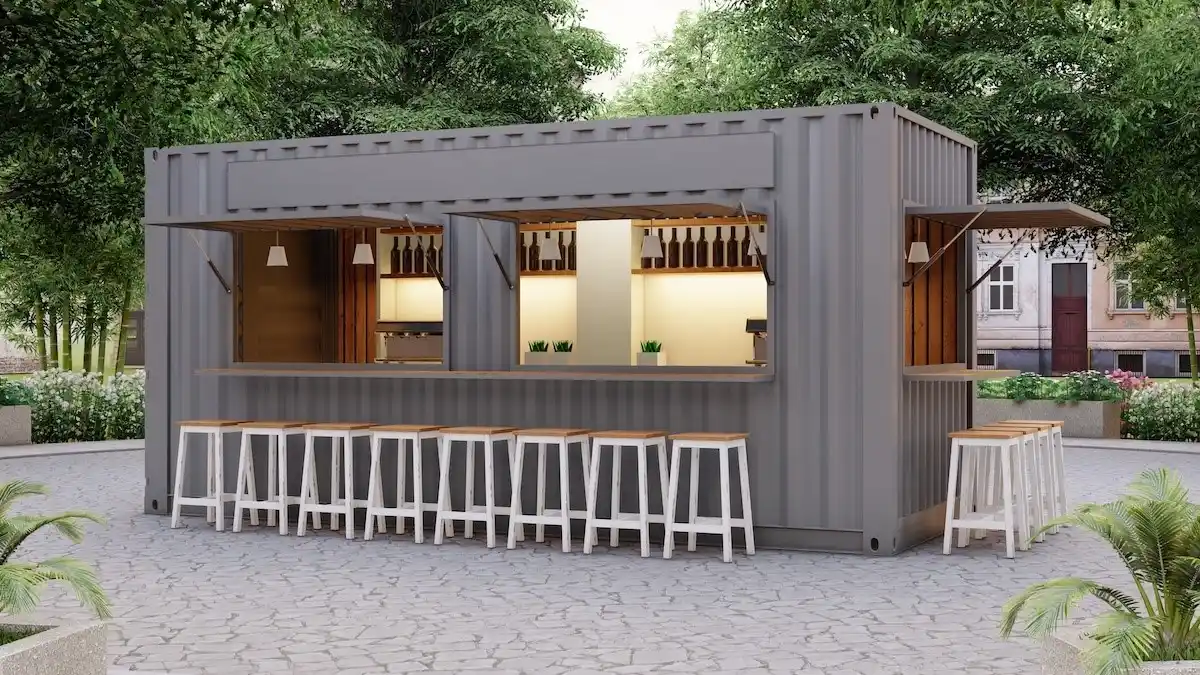
Shipping containers are providing a strong, cityscape style that is attractive to consumers today. The pop-up stores, food stalls, coffee bars, and mobile boutiques made from repurposed containers have emerged in cities worldwide. With minimal environmental impact and a low initial capital outlay, they provide entrepreneurs with the freedom to enter markets at a low risk. In contrast to traditional stores that require long-term leases or a high capital outlay to open, container stores can open rapidly, relocate easily, and adapt to seasonal or market changes.
Vendors use adapted containers as safe booths that are easily installed and removed, requiring minimal infrastructure for large events or short-term markets.
Shipping container homes: Cost-effective, long-lasting, and eco-friendly living
One of the most revolutionary shifts in shipping container applications has been in its repurposing as residential units. As house prices rise and cities become increasingly densely populated, there is a pressing need for subsidized accommodation, and containers offer a viable solution. The use of tiny houses and container houses as alternative accommodation without sacrificing style or comfort is an attractive proposition.
These can be built as single units or expanded to form multi-container configurations, stacked to form multi-storey structures, or horizontally combined for added square footage. Provided with good insulation and planning, they can become as comfortable and energy-efficient as a conventional house. Indeed, most contemporary container houses feature solar panels, rainwater collection systems, and other smart features that appeal to individuals seeking sustainability and off-grid living.
Whole communities, particularly in cities, have been constructed from shipping containers. These types of housing are quick to construct, simple to customize, and very inexpensive, making them perfect for low-income individuals, students, or environmentally conscious homeowners.
Converting Shipping Containers into Greenhouses and Farming Solutions
One of the most creative applications of containers is Transforming Shipping Containers into Greenhouses. In a world where food security is an increasingly pressing issue for both rural and urban environments, more and more farmers and companies are turning to controlled-environment agriculture as a solution. Containers are an ideal foundation for hydroponic or acrophonic systems, which enable plants to be produced without soil, utilizing a nutrient-enriched water solution.
These greenhouses precisely control temperature, humidity, and lighting, allowing high-yield crops to be grown at any time of the year, regardless of weather conditions. In areas with limited land availability for farming, poor soil quality, or severe weather conditions, container farming is a viable alternative. Not only does it conserve water, but it also eliminates the use of pesticides and significantly reduces the transportation requirements associated with traditional farming.
Repurposed shipping containers now serve as urban farms, providing local grocery stores, restaurants, and community markets with fresh produce directly. This hyperfocal model means fresh vegetables are available daily, lower carbon emissions, and employment opportunities in cities with previously limited agricultural prospects.
Critical Infrastructure in Healthcare and Emergency Services
Shipping containers have also served as a vital lifeline for disaster relief and humanitarian aid. Because they are portable and durable, shipping containers are suitable for use as emergency shelters, mobile field hospitals, and command centers. After a natural disaster, such as a hurricane, earthquake, or flood, containers can be rapidly delivered in a customized state to provide shelter, energy, water, and sanitation services to impacted individuals.
Healthcare providers and non-governmental organizations utilize containers to develop mobile health units that can be transported to provide healthcare services to underserved populations. The units may include examination rooms, diagnostic equipment, and drug storage facilities. In response to the COVID-19 pandemic, numerous countries utilized containerized isolation rooms, test centers, and vaccination facilities to deliver quick and effective responses to public health emergencies.
Since they are easily sealed and disinfected, containers provide a hygienic and safe environment that suits both patients and healthcare workers.
Cultural, Recreational, and Educational Adapt
In the artistic world, shipping containers are now converted into community centers, galleries, and event venues. The modularity makes them an ideal choice for artists, musicians, and community organizations to use as a low-cost, relocatable venue for cultural events. Urban developers now utilize containers in parks, pop-up theaters, and interactive exhibits that connect with people while refurbishing neglected areas.
Recreational uses involve repurposing containers as above-ground swimming pools, gyms, yoga rooms, or climbing walls. Due to their small footprint, they’re perfect for use in cities where space is at a premium.
In schools and universities, containers are used to expand classroom space rapidly. Particularly in fast-growing communities or areas with poor infrastructure, container classrooms offer a timely and durable solution. For vocational training schools, computer centers, or mobile learning centers in rural or far-out areas, they are particularly suitable.
The Demand For New and Used Shipping Containers For Sale is Rising
As the world shifts toward sustainable development and flexible infrastructure, the use of shipping containers is on the rise. Companies seeking quick deployment and low-cost construction, individuals seeking sustainable and creative accommodations, and governments requiring rapid and scalable emergency response options are driving the increased demand for new and used shipping containers for purchase.
These containers are no longer mere storage units, they are an icon for creative, low-cost, and forward-thinking responses to some of mankind’s largest challenges. Their potential for reuse reduces waste, increased availability lowers the price, and flexibility creates a world of possibilities for people willing to think outside the box.
Having a lifespan that can easily outlive us and potential that’s only just beginning to be tapped, shipping containers have become integral to how we construct, live, expand, and foster connections. As this trend continues on, watch for even more revolutionary uses to spring forth from the humble steel box.