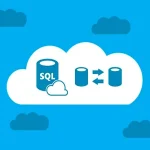
Organizations today are challenged to grow their operations while updating their data infrastructure and getting insights quickly. For many, this means rethinking existing data warehousing approaches and considering cloud-native alternatives. The strategic and highly leveraged migrations in this move to the new world are the shifts moving to Snowflake, not only modernizing data architecture but also enabling agility, performance, and cost efficiencies.
Microsoft’s SQL Server has been an on-premises and hybrid enterprise database. But that approach has its bounds as companies amass more data, grow outside their home countries, and want to conduct real-time analysis. Snowflake, designed in the multi-cluster, cloud-native tradition, is a modern, purpose-built alternative designed for the scale and elasticity of the modern enterprise.
Find out how to migrate from SQL Server to Snowflake with zero downtime and zero data loss using BryteFlow’s automated real-time data replication solution.
Why Organizations Are Migrating from SQL Server to Snowflake:
Some organizations decide to replace SQL Server with Snowflake to get out from under the constraints of hardware and licensing and to take advantage of features such as auto-scaling and the ability to separate storage and compute, along with pay-as-you-go pricing. But migration isn’t simply a matter of moving data—it’s about redesigning how data is stored, accessed, and made to deliver on the promise of business intelligence.

The first and biggest challenge faced when migrating to Snowflake is schema transformation. T-SQL and relational modeling are forces on SQL Server, but they won’t get the organization very far on Snowflake.
Ensuring Seamless Migration with Real-Time Data Replication:
Real-time data replication is another important consideration. For a lot of businesses, they can’t afford a lengthy system downtime while migrating. With BryteFlow, log-based Change Data Capture (CDC) replicates data in real time from SQL Server to Snowflake and keeps doing so even though the source system is alive and kicking. Each insert, update, or delete that occurs is recorded and reflected, ensuring data integrity and no interruption to the business.
Migrating and post-migration, organizations have other threats to security. SQL Server is generally paired with Windows auth, AD, and on-prem encryption standards. BryteFlow data pipelines are 100% secure in transit and at rest, and this is critical in guaranteeing that enterprise data doesn’t take a dip in compliance levels as it transitions.
The advantages of migrating from SQL Server to Snowflake are more than just rules about performance. Snowflake natively supports semi-structured data formats such as JSON and XML, which provides more flexibility for analyses.
Migrate with ease with established platforms. It is designed to accelerate the migration process by automating it. From initial ingestion of data to ongoing syncs and transformations, businesses save hours of time and countless resources. The platform provides built-in change data capture, schema evolution, error handling, and reconciliation.
Read more about how BryteFlow’s intelligent, automated tools are taking the grunt work out of migrating from SQL Server to Snowflake and kickstarting their data strategy in a no-hassle way.
Maximizing BI Performance: Snowflake’s Seamless Integration with Top Tools
Snowflake’s compatibility with such advanced BI tools as Tableau, Looker, or Power BI also lets you reach insights at a much quicker rate. Once the data does land in Snowflake, analysts and business users can run queries without harming system performance—where it stores data, even in its multiple clouds—from its compute clusters. This decoupling enables great concurrency and speed, even when thousands of queries are running concurrently.
Cost benefits are another reason to migrate from SQL Server to Snowflake. With conventional databases, costs can be unpredictable because of licensing and storage and maintenance fees. With Snowflake’s pay-per-use pricing, transparency is built in, and organizations only pay for what they use, allowing them to easily optimize costs, mitigate overspending, and budget accurately.
Leveraging Cloud-Native Features: Snowflake’s Role in DevOps and Real-Time Data Streaming
Cloud-native features are also of particular interest to organizations that are embracing DevOps, agile delivery methodologies, and CI/CD pipelines. Its API-driven interface and compatibility with today’s data ops tools ensure that Snowflake is well-positioned to be a new, modern data architecture deployment target. When combined with real-time ingestion, businesses can now stream data from SQL Server to Snowflake in real time for use cases such as predictive analytics, fraud detection, and real-time dashboards.
Enterprises get a proven migration methodology that has been successfully deployed across a wide spectrum of industries, from retail to finance to healthcare to logistics.
The migration from SQL Server to Snowflake is a strategic move, not just a tactical upgrade to be done on a whim; instead, it is a strategic leap to more adaptable, intelligent, and agile data. It releases you to store boundless data, compute at scale, and get ultra-fast insights faster than other data warehouse offerings.
After thousands of successful migrations, BryteFlow is now the preferred SQL Server to Snowflake migration solution for companies wanting a disruption-free transition. Its automation-first design, obsession with data integrity, and real-time nature enable companies to modernize with confidence and speed.
For any company looking to future-proof their data infrastructure, transitioning off to Snowflake isn’t just good—it’s unavoidable. And with the right set of tools, it can also be easy.