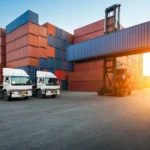
Every job site with vehicle movement has one thing in common: risk. Forklifts in warehouses, delivery trucks in loading zones, skid steers on construction sites—each represents a potential hazard, especially when they’re operating in the same space as foot traffic.
The problem isn’t that vehicles are dangerous by nature. The problem is that most workplaces don’t do enough to keep people and machines safely separated. It’s not just about driver training or PPE. It’s about the physical environment—and whether it gives both operators and pedestrians clear, visible guidance.
That’s where vehicle safety zones come in.
Why Vehicle-Related Incidents Keep Happening
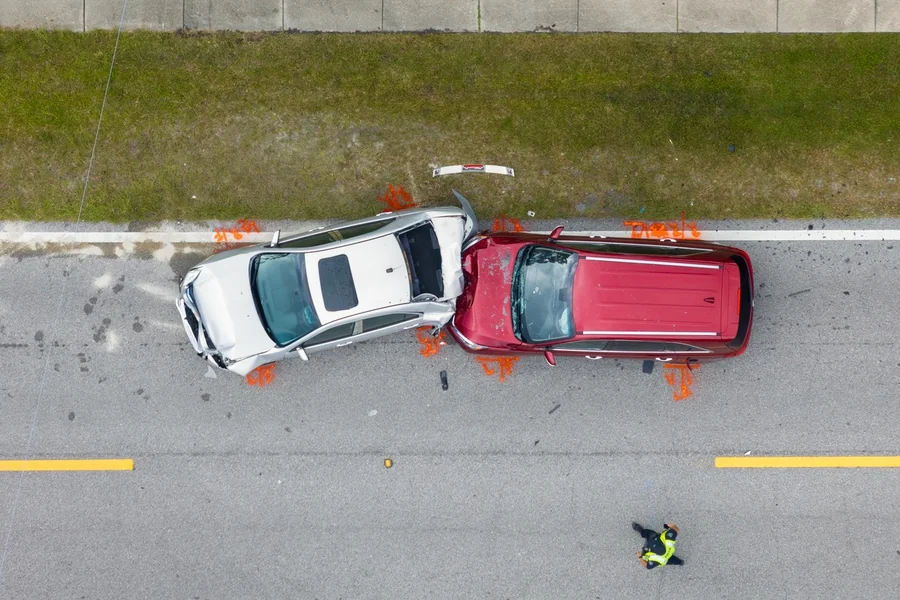
Vehicle accidents at worksites are rarely the result of recklessness. More often, they’re caused by unclear traffic patterns, poor visibility, or a lack of physical barriers.
Here’s a common scenario: a forklift backs up in a warehouse aisle. A worker on foot is coming around the corner. There’s no mirror, no warning sign, and no marked pedestrian walkway. The operator doesn’t see the worker until it’s too late. This kind of “struck-by” accident is one of the leading causes of workplace injuries—and they’re almost always preventable.
The underlying issue is this: when foot traffic and vehicles share the same space, without clear separation, you’re asking for trouble.
What Makes a Safe Vehicle Zone?
A well-designed vehicle zone does one thing extremely well—it removes ambiguity. Everyone on-site should know exactly where they’re supposed to be, and exactly where they shouldn’t.
That means using the right products in the right places, such as:
1. Clear, Durable Signage
High-visibility signs warn drivers of pedestrian areas and alert workers to active vehicle routes. They help enforce speed limits, indicate right-of-way, and reduce confusion at intersections or loading zones.
2. Physical Barriers and Bollards
Wherever possible, you want hard separation. Bollards, guardrails, and modular barriers make it physically impossible for a forklift to drift into a pedestrian walkway—or for a worker to walk into a restricted zone.
3. Surface Markings
Floor tape, paint, and decals designate lanes, parking spots, and crosswalks. These simple visual cues bring order to chaotic spaces. Indoors or outdoors, they’re among the most cost-effective safety upgrades you can make.
4. Speed Control Devices
Speed bumps and wheel stops aren’t just about slowing down traffic—they also help define driving routes and prevent unexpected movement near docks or entrances.
5. Mirrors and Lighting
Convex safety mirrors at blind corners and well-placed lighting improve visibility for both drivers and pedestrians. They’re a must in dim environments or anywhere with tight turns.
Why Product Quality Matters
You can’t solve long-term safety problems with temporary fixes. Traffic cones, duct tape, or handwritten signs might work for a day, but they won’t hold up under pressure, weather, or time. When safety products fail, the risk comes roaring back.
That’s why product quality is key. Safety gear needs to be built for industrial conditions—heavy use, harsh weather, and high visibility requirements. Skimping on materials leads to faded signs, broken barriers, and a false sense of security.
Companies serious about safety choose vendors who specialize in tough, purpose-built gear. If you’re outfitting a warehouse, loading dock, or construction site, Safety Zone Specialists offers a full range of vehicle safety products designed for exactly these environments.
Safety and Efficiency Go Hand in Hand
Some managers worry that adding safety zones will slow things down. But the opposite is true. When people know where to go and vehicles have clear paths to follow, movement becomes more efficient—not less.
There are fewer delays, fewer reroutes, and fewer miscommunications. Forklifts don’t have to slam on the brakes because someone wandered into the lane. Workers don’t hesitate because they’re unsure whether it’s safe to proceed. Productivity goes up, and stress goes down.
The Cost of Doing Nothing
It’s easy to ignore a missing sign or a faded line. It’s harder to ignore the fallout from an injury:
- Workers’ comp claims
- OSHA fines
- Lawsuits
- Damaged equipment
- Lost time
- Bad press
- Lower morale
And then there’s the worst-case scenario: someone doesn’t make it home. That’s a reality no company should face—especially when basic products could have prevented it.
Final Word
If your site involves moving vehicles, you need clearly defined vehicle safety zones. It’s not a luxury—it’s the baseline for a safe working environment. The right combination of signage, barriers, surface markings, and visibility tools can prevent serious incidents and create a smoother, more professional operation.
Don’t wait for a close call to take action. Build a safer layout with the tools built for the job.