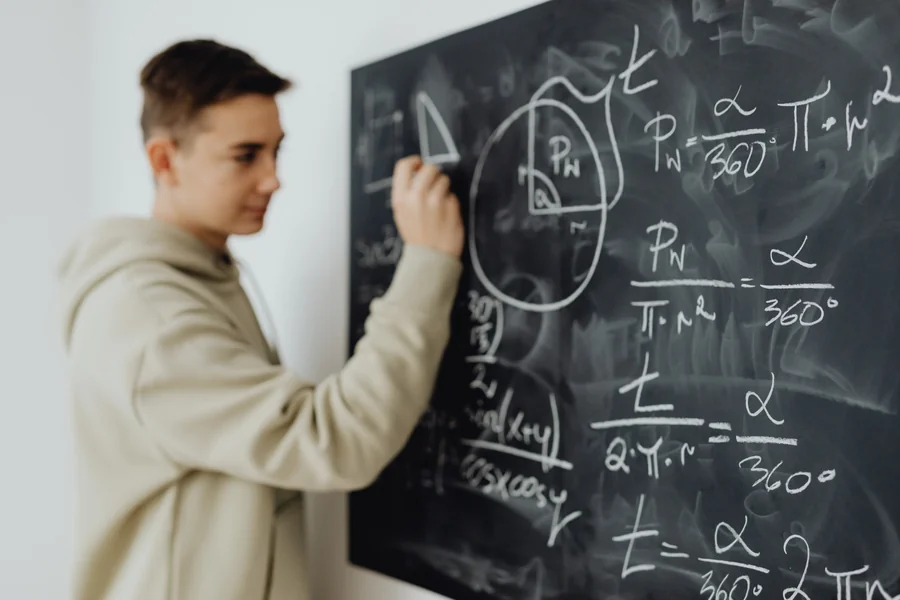
Math gets a bad reputation. For others, it brings back memories of garbled equations and long tests. But beyond the classroom, math rears its head in everyday decisions—sometimes hidden from us, but relentless. When you’re at the grocery store balancing your budget, or struggling to unravel the ingredients in a recipe, math has a quiet yet powerful role in your everyday life.
This article guides you through everyday situations where the application of simple math makes life easier, saves you money, and reduces stress.
Grocery Store Decisions
You are in the supermarket. You’re deciding between the cost of two brands of rice. One costs $3.49 for 2 pounds, and the other one costs $5.29 for 3 pounds. Which one has greater value for money?
A quick division reveals that:
- $3.49 ÷ 2 = $1.745 per pound
- $5.29 ÷ 3 = $1.763 per pound
In appearance, the bigger appears to be the better buy, but the smaller one pulls ahead by just one hair. The numbers in your head, your calculator, or your app will help you spot these discrepancies—especially at budget time.
Planning Travel Routes
Time is money, at least during traffic. Assume you’re planning the road to your workplace. One road is shorter in terms of distance but has slower speed and more traffic lights. The other one is longer but mostly interstate.
You can calculate what’s quicker by finding average speed and estimated time. If Route A is 10 miles at 25 mph (24 minutes), and Route B is 15 miles at 50 mph (18 minutes), Route B is quicker even though it’s longer.
Budgeting and Saving
Budgeting is not just limiting how you spend your money. Budgeting is finding out where your money is spent and where to make tiny adjustments to make the most impact. This is where percentages and plain subtraction come in.
Let’s say you earn $3,000 a month and aim to save 10%. That’s $300. Knowing how to calculate percentages helps break goals into manageable targets. If you then review your subscriptions, daily coffee runs, and dining expenses, you might find $10 here, $25 there—real savings potential with basic math.
Recipes and Proportions
Ever tried halving or doubling a recipe? That’s math. If a dish serves 6 but you only need it for 3, each ingredient needs to be cut in half. Working with fractions and ratios helps you avoid waste or poorly balanced dishes.
For example:
- Original: 1 ½ cups of flour
- Halved: ¾ cup
- Doubled: 3 cups
Without this math, you risk a lumpy cake or soupy stew. It’s not about being a chef—it’s about being precise.
Home Improvement Projects
Say you’re tiling a bathroom floor. The area is 6 feet by 8 feet, so 48 square feet. The tiles come in 1-foot squares. Easy enough: you’ll need 48 tiles. But what if some need cutting, or you want extras in case of mistakes? Adding 10% as a buffer (around 5 tiles) prevents a second trip to the store.
Other Real-Life Problems Math Helps With:
- Splitting bills at restaurants
- Comparing interest rates on credit cards or loans
- Understanding electricity usage on your utility bill
- Planning a workout routine (e.g., reps, rest periods, calories burned)
- Deciding whether a bulk buy is truly a better deal
In fact, according to the Organization for Economic Co-operation and Development (OECD), those with higher scores in everyday numeracy have greater chances of being employed and obtaining higher grades in terms of salary than those who struggle with numbers.
When to Call for Help
You don’t necessarily have to like math—or be comfortable with math. That’s okay. If you’re a parent wanting to help your child catch up in school or you’re an individual who wants to improve your daily math skills, you’ll be able to find maths tutors online with ease.
Online tutoring is easy to use and stresses natural understanding, not memorizing formulas. The proper tutor makes math from everyday life less intimidating and more practical.
Final Thoughts
Math isn’t just for engineers or accountants. Math is for everyday life. No matter if you’re comparing prices, planning your week, or tweaking a recipe, knowing some math allows you to be in charge and understand what’s going on. You don’t have to know calculus to make more intelligent decisions—you just need to know enough to understand where some number-crunching can make the biggest difference.