Some days your body moves smoothly; other days, every step feels stiff. A big part of this comes down to mobility. Mobility is more than touching your toes. It’s the ability of your joints to move on their own through a full range of motion with control and strength.
This makes movement smooth, efficient, and pain-free. Without good mobility, simple tasks can feel hard, and your chances of aches and injuries go up.
Think of your body like a system of moving parts. If one part can’t move well, the whole system pays the price. In this article, we explain what mobility is, how it’s different from flexibility, and why building it helps you move without pain.
If you have tight spots that need extra help, a tool like a hamstring massage tool can help release tension and improve your range of motion.
What Is Mobility and Why Does It Matter for Pain-Free Movement?
Defining Mobility in the Context of Human Movement
Mobility means being able to move freely and under control. In daily life, that includes walking, turning, and changing direction without stiffness or pain. In sports and exercise, it means your joints and nearby tissues can move through a useful range while your muscles guide and control the motion.
It’s not only your muscles at work. Ligaments, tendons, and your nervous system all play a part in smooth, coordinated movement.
Everyday tasks show your mobility at work: getting out of bed, showering, climbing stairs, carrying bags, or getting in and out of a car. When mobility drops due to aging or too much sitting, these simple tasks get harder. That shows how central mobility is to a healthy, independent life.
Mobility vs. Flexibility: What’s the Difference?
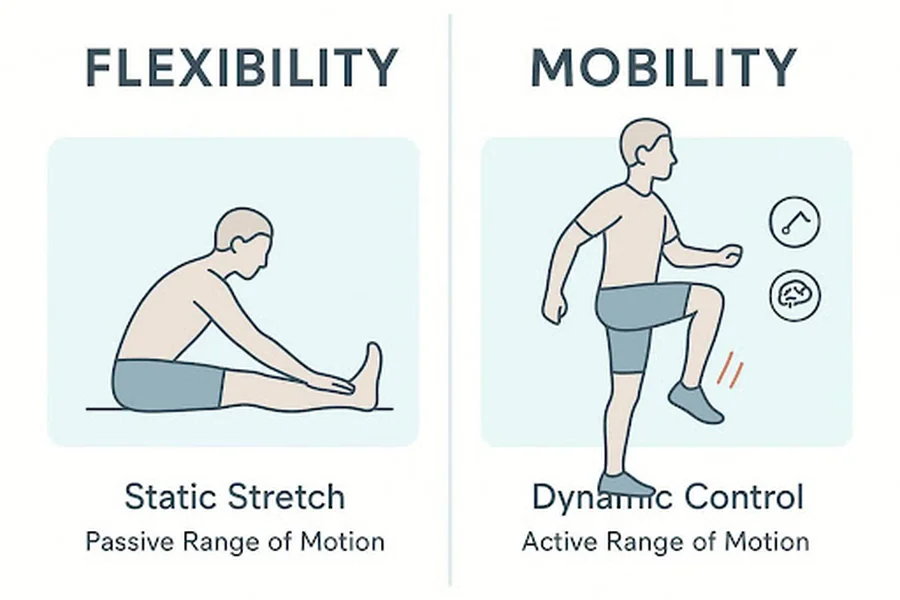
Many people mix these up. Flexibility is your passive range-how far a muscle can lengthen when relaxed or pushed. Mobility is active control-moving a joint through its range with strength and stability.
You might have long hamstrings (flexible), but without control at the hip, movements like squats or L-sits still feel tough. Mobility turns potential range into useful movement.
| Flexibility | Mobility |
| Passive muscle length | Active joint control |
| Helps increase range | Helps you use that range |
| Often static holds | Strength + control through range |
How Mobility Impacts Daily Activities
Good mobility makes daily tasks feel easy. You can reach, bend, and walk without stiffness. Tying your shoes, grabbing items from a high shelf, or taking a long walk feel natural.
Poor mobility makes these same tasks feel awkward or painful. It can take the fun out of hobbies, make playing with kids harder, and affect your independence as you age. “Use it or lose it” applies here-if you stop moving well, it gets harder to move well.
How Poor Mobility Contributes to Pain and Injury
Common Causes of Mobility Limitations
Mobility often fades slowly due to habits and lifestyle. Common causes include:
- Long periods of sitting (short, tight hip flexors and hamstrings)
- Low activity levels and lack of varied movement
- Old injuries that change how you move
- Posture habits that add stress to joints
- Aging, which can weaken muscles and reduce joint health
Mechanical Pain: The Body’s Warning Signs
When one area moves poorly, another area takes on extra work. This can cause mechanical pain — your body’s signal that something is off. Stiff hips might make your lower back work too hard when you bend or lift. Tight ankles can shift stress to your knees or hips. Morning stiffness, trouble reaching overhead, or pain when bending are common signs.
To ease that tension and restore natural movement, try Mobilization Magic — a self-myofascial release tool designed by an award-winning physiotherapist to relieve pain, improve mobility, and help your body move the way it’s meant to.
Compensation Patterns and Long-Term Effects
Your body adapts, but those workarounds have a cost. If a joint can’t do its job, other areas step in. Over time this can cause muscle imbalances, irritation, and overuse injuries. For example, poor shoulder motion may lead you to shrug or arch your back to reach overhead, which can lead to neck pain or rotator cuff problems.
Mobility without control can make joints unstable, while only focusing on stability can leave you stiff. You need both.
Benefits of Improving Mobility for Pain-Free Living
Reduces Joint and Muscle Pain
Better mobility spreads load across joints and tissues the way your body intends. That lowers stress on tight or sore areas and can reduce stiffness and aches, especially in the hips, spine, and shoulders. Training joints to move well helps address the cause of many nagging pains.
As movement quality improves, daily activities feel easier. You’ll have fewer sharp twinges and more comfort during bending, twisting, and lifting.
Improves Athletic Performance and Everyday Function
Athletes gain better technique, more power through full ranges, smoother recovery, and fewer setbacks. Golfers swing fuller, runners strike the ground more cleanly, and lifters hit depth with control.
For everyone else, life just feels easier. You can reach high shelves, get down to the floor and back up, and stand taller with better posture. Mobility is the base for all movement, from walking to lifting.
Helps Prevent Injuries
Many studies link good mobility with fewer injuries. When joints and muscles move well together through full range, your body handles stress better. Poor mobility often leads to workarounds that load the knees, shoulders, or lower back in unhelpful ways, which can lead to strains, sprains, and overuse issues.
Improving mobility builds a body that can absorb force, react to surprises, and stay aligned during activity. That lowers your risk.
Supports Healthy Aging and Independence
Range of motion often drops with age, bringing stiffness, balance issues, and higher fall risk. Regular mobility work can slow or reverse many of these changes. It helps you stay steady, strong, and active.
With better joint motion and control, you can keep gardening, hiking, playing with grandkids, and moving around your home with confidence. It helps you stay independent longer.

Key Areas of the Body Where Mobility Matters Most
Hip Mobility and Lower Back Health
The hips power most lower-body movements and support the core. Stiff hips are a common cause of lower back pain. If the hips don’t move well, the back often moves too much to make up for it. Work on both internal and external rotation of the hip.
Helpful drills include 90/90 positions, hip circles, and spider lunges. As hip motion improves, the lower back can settle into a more stable, comfortable position.
Shoulder Mobility for Upper Body Function
Shoulders are built for big ranges of motion, but long hours of sitting and repetitive tasks can limit them. This shows up as trouble reaching overhead, stiffness, and neck or upper back pain. A stiff mid-back also restricts the shoulders.
Try arm circles, wall angels, overhead reaches, and shoulder CARs. Also move the thoracic spine with gentle rotations. These help the shoulder blades glide well, improve posture, and lower strain.
Spine and Ankle Mobility for Movement Efficiency
Your spine needs to bend and rotate for most movements. A stiff spine can cause local pain and force other areas to compensate. Mid-back (thoracic) motion supports shoulder health and posture. Cat-cow, “Thread the Needle,” and gentle twists can help.
Ankles matter for balance, shock absorption, and walking mechanics. Limited dorsiflexion can affect squat depth, running form, and even knee comfort. Use ankle circles, calf stretches, and dorsiflexion drills to build a solid base for movement.
What Are the Main Approaches to Mobility Training?
Dynamic Stretching and Controlled Articular Rotations
Modern warm-ups favor dynamic movement over long static holds. Dynamic stretching moves you through range with growing reach and speed-think leg swings, arm circles, and torso twists. This raises blood flow and wakes up your nervous system.
Controlled Articular Rotations (CARs) are a gold standard. You slowly take a joint through the largest pain-free range you have, keeping tension and control the whole time. This teaches your brain to own the full range and builds strength at the edges, turning passive range into usable range.
Movement-Based Mobility Drills
These drills train full patterns, not just single joints. If a deep squat is hard, spend time in the bottom of the squat while keeping good form. Practice the movement you want to improve.
Examples include one-and-a-quarter back squats and snatch presses while holding a squat. These build strength, control, and coordination across many joints at once, not just length in one muscle.
Active vs. Passive Mobilization Techniques
Passive methods include static stretching or having a therapist move your limb. They increase passive range but don’t always carry over to real movement.
Active methods use your muscles to move and hold at end range. End-range isometrics and loaded stretching help you gain strength and control where you’re weakest. This makes new range durable and usable.
How to Build a Sustainable Mobility Routine
How Often Should You Train Mobility?
Consistency matters more than long sessions. Five to ten minutes a few times a week-or daily-beats one long session. Short “movement snacks” during the day work well, especially if you sit a lot.
If you’re new, aim for two to three sessions per week, then build to four or five. You can do light mobility most days as long as you avoid sharp pain. Use it as a warm-up, a cool-down, or a quick break during the day.
Choosing Exercises Specific to Your Needs
Skip one-size-fits-all plans. Pick drills for your problem areas and your goals:
- Tight hips from sitting? Do hip openers and rotations.
- Rounded shoulders from desk work? Add thoracic rotations and shoulder CARs.
- Stiff ankles limiting your squat? Work ankle rocks and dorsiflexion drills.
A physical therapist can check your movement, find your weak links, and build a plan for you. Runners often need ankle, hip, and hamstring work. Desk workers often need hip flexor and mid-back work. Target what holds you back to see faster progress.
Integrating Mobility Work into Your Daily Life
Make mobility part of your routine so it feels natural. Treat it like “movement snacks.” During a break, do hip circles or thoracic rotations for five minutes. Before a shower, try cat-cow or arm circles.
Use mobility as a warm-up to prep your joints, as a cool-down to ease stiffness, or anytime you feel tight. Small posture checks through the day also help. Small, regular practice leads to lasting change.
Practical Tips to Improve Mobility and Move Without Pain
Start Small: Simple Mobility Exercises for Beginners
You don’t need long workouts or complex drills. Start small and be consistent:
- Cat-Cow: On hands and knees, slowly arch on the inhale and round on the exhale for 30-60 seconds.
- 90/90 Hip Openers: Sit with one leg bent 90° in front and one 90° behind. Lean forward over the front leg for 30 seconds per side.
- Ankle Rocks: In a half-kneeling position, shift your front knee over your toes without lifting the heel.
Five to ten minutes daily can make a real difference.
Listen to Your Body: Recognizing Good vs. Harmful Discomfort
A gentle stretch or light tension is okay and should ease as you hold or move. Sharp, stabbing, or radiating pain means stop. Move slowly and with control. If a drill hurts, shrink the range or pick an easier version. The goal is better function with less pain.
When to Seek Professional Guidance
If you have ongoing pain, big limits in motion, or you’re recovering from injury or surgery, see a physical therapist. They can run a full check, find the source of the problem, and give you a plan that fits your needs.
They will coach your form, help you rebuild confidence, and offer tools you can use at home. Getting help early can prevent bigger problems and speed up progress.
Common Myths and Questions About Mobility
Does More Stretching Always Mean Better Mobility?
No. Stretching builds passive range, but mobility needs strength and control too. You might be very bendy in a yoga pose yet still struggle with a basic squat if you can’t control the joint through range.
- Stretching: good for muscle length
- Mobility: adds strength and control at end range
Active work at the edges of your range is what turns flexibility into useful movement.
Is Mobility Only Important for Athletes?
No. Everyone needs it. Mobility supports walking, bending, lifting, gardening, and play. Without it, daily tasks get stiff and painful, and quality of life drops.
As you age, keeping mobility helps prevent falls and supports independence. Add simple mobility work to your routine to move better and feel better at any age.
Should Mobility Training Be Done Before or After Workouts?
Both times work. Before a workout, use dynamic mobility to warm up joints and muscles and get your nervous system ready. After a workout, use gentle mobility to ease soreness and bring back full range. Short daily sessions are the real game-changer. Pick the timing that fits your day and stick with it.